
 352-639-5270



A comprehensive guide on web development for startups in 2025, covering MVP, UI/UX, SEO, scalability, and more for emerging businesses.
The Strategic Foundation of Startup Success
Web development for startups is the process of creating a website or web application specifically designed to help new businesses establish their online presence, validate their ideas, and scale quickly in a competitive market.
For startups seeking immediate answers about web development in 2025, here are the essentials:
| Key Component | What Startups Need to Know |
|---|---|
| MVP Approach | Start with a Minimum Viable Product to test core ideas with minimal investment |
| Technology Stack | Choose scalable technologies like React, Node.js, or WordPress based on your specific needs |
| Development Timeline | Typically 4-8 weeks for an MVP, 3-6 months for a full-featured site |
| Cost Range | $3,000-$15,000 for MVP; $15,000-$50,000+ for comprehensive solutions |
| Key Focus Areas | User experience, mobile responsiveness, scalability, and SEO optimization |
In 2025's digital landscape, a startup's website serves as more than just an online brochure—it's often the first point of contact with potential customers, investors, and partners. According to the latest industry research, 48% of people determine a company's credibility based on its website design, making web development a critical factor in establishing trust from day one.
The challenges for startups are unique: limited resources, pressure to enter the market quickly, and the need to iterate based on user feedback. Unlike established businesses that might focus on maintaining existing systems, startups need web development approaches that prioritize speed, agility, and room for rapid growth.
"A startup website should not be treated like an average web resource, but rather as a dynamic tool that drives business growth," notes one industry expert from our research. This perspective highlights why many successful startups opt for a phased approach, beginning with an MVP (Minimum Viable Product) that can be refined based on real market feedback.
For startups in Gainesville and beyond, finding the right balance between quality, cost, and speed is essential when starting on web development projects. Working with experienced developers who understand the unique challenges of startup environments can make the difference between a website that merely exists and one that actively contributes to business growth.
Understanding Web Development for Startups
Web development for startups isn't just smaller-scale traditional web development—it's an entirely different approach that accepts the unique needs of new businesses. While established companies might roll out comprehensive websites with all the bells and whistles, startups need something more nimble and adaptable.
Think of it this way: established businesses build digital mansions, while startups need to construct smart tiny homes that can expand as they grow. This fundamental difference shapes everything about the development process.
"In contrast to creating the average web resource, developing websites for startups demands more creativity and strategic planning," as one industry expert puts it. This creative thinking matters because startups often need to make a powerful first impression despite limited resources.
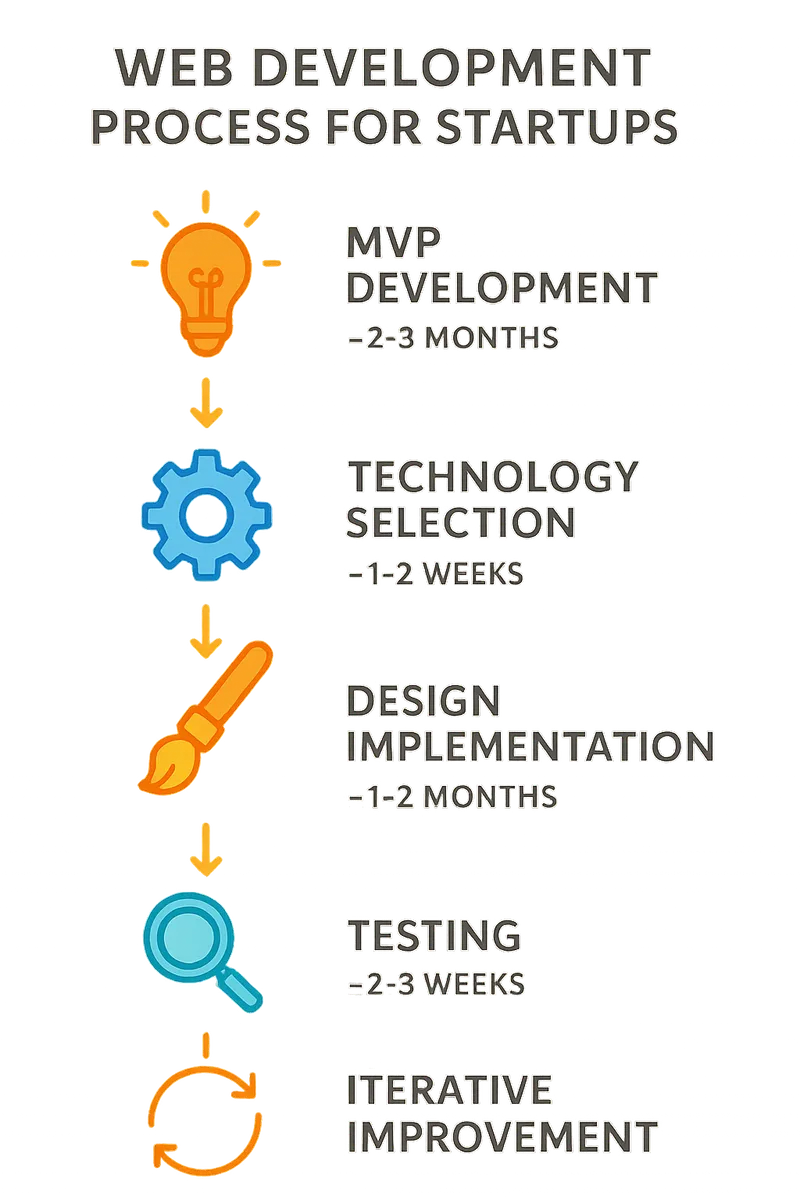
What makes startup web development special in 2025 is its emphasis on speed, agility, and scalability. Startups can't wait months for the perfect website—they need to get to market quickly to test ideas and start generating revenue. The development process typically follows an agile approach, with continuous improvements based on real user feedback rather than assumptions. And everything must be built with growth in mind, so the site can expand without requiring a complete rebuild when success comes knocking.
Here in Gainesville, we've seen countless local startups thrive by embracing these principles. Our local tech ecosystem has warmly welcomed these startup-friendly approaches to web development, as we explored in our article on Exploring Gainesville Web Development.
Importance of Web Development for Startups
Your startup's website isn't just a digital business card—it's often your most powerful marketing tool, sales representative, and brand ambassador all rolled into one.
First impressions matter enormously. Nearly half of all consumers judge a company's credibility based solely on its website design. When you're a startup without established brand recognition, that first digital handshake becomes even more crucial.
Testing business concepts becomes infinitely more affordable with a well-designed website. Rather than investing heavily in physical products or locations, you can validate your ideas in the real market with minimal upfront costs.
Investor interest often starts with a visit to your website. Like it or not, potential investors frequently evaluate a startup's digital presence during their due diligence process. A polished, thoughtfully executed website signals professionalism and attention to detail that can open doors to funding.
Growth potential should be baked into your site from day one. The right web development for startups creates a foundation that can scale alongside your business, accommodating increasing traffic and expanding functionality needs without starting from scratch.
The financial impact of quality web development is substantial. The latest 2025 research shows companies prioritizing design see an average 32% boost in profits and 56% better returns to shareholders. That's not just looking good—that's good business.
Key Features in Web Development for Startups
When building a startup website in 2025, certain elements deserve special attention to maximize impact with minimal resources:
Crystal-clear value proposition should greet visitors immediately. Within seconds, users should understand what problem your startup solves and why your solution is different from alternatives. This clarity cuts through noise and connects with potential customers who need what you offer.
Responsive design isn't optional in today's multi-device world. With roughly half of all web traffic coming from mobile devices, your site needs to look and function beautifully whether viewed on a phone, tablet, or desktop.
Lightning-fast load times keep visitors engaged. When 40% of users abandon websites that take more than 3 seconds to load, performance optimization becomes crucial for maintaining audience interest and improving conversion rates.
Intuitive navigation reduces friction in the user experience. Visitors should find what they're seeking within 1-2 clicks, without hunting through confusing menus or buried pages.
Compelling calls-to-action guide users toward meaningful engagement. Whether it's signing up for updates, requesting a demo, or making a purchase, strategic CTAs create clear pathways to conversion.
Behind the scenes, analytics integration provides the insights needed for continuous improvement, while scalable architecture ensures your technical foundation can support growth without requiring a complete rebuild when success arrives.
These elements form the backbone of effective web development for startups, creating a launchpad that evolves alongside your business vision. At GNV Web Design, we've seen how these principles help Gainesville startups transform from scrappy newcomers into established players in their industries.
Benefits of Custom Web Development Services
When you're launching a startup, it's tempting to grab a template and get online fast. After all, templates are affordable and quick. But is that the best long-term strategy for your business? Let's talk about why custom web development for startups might be worth the investment.
Custom Development vs. Templates
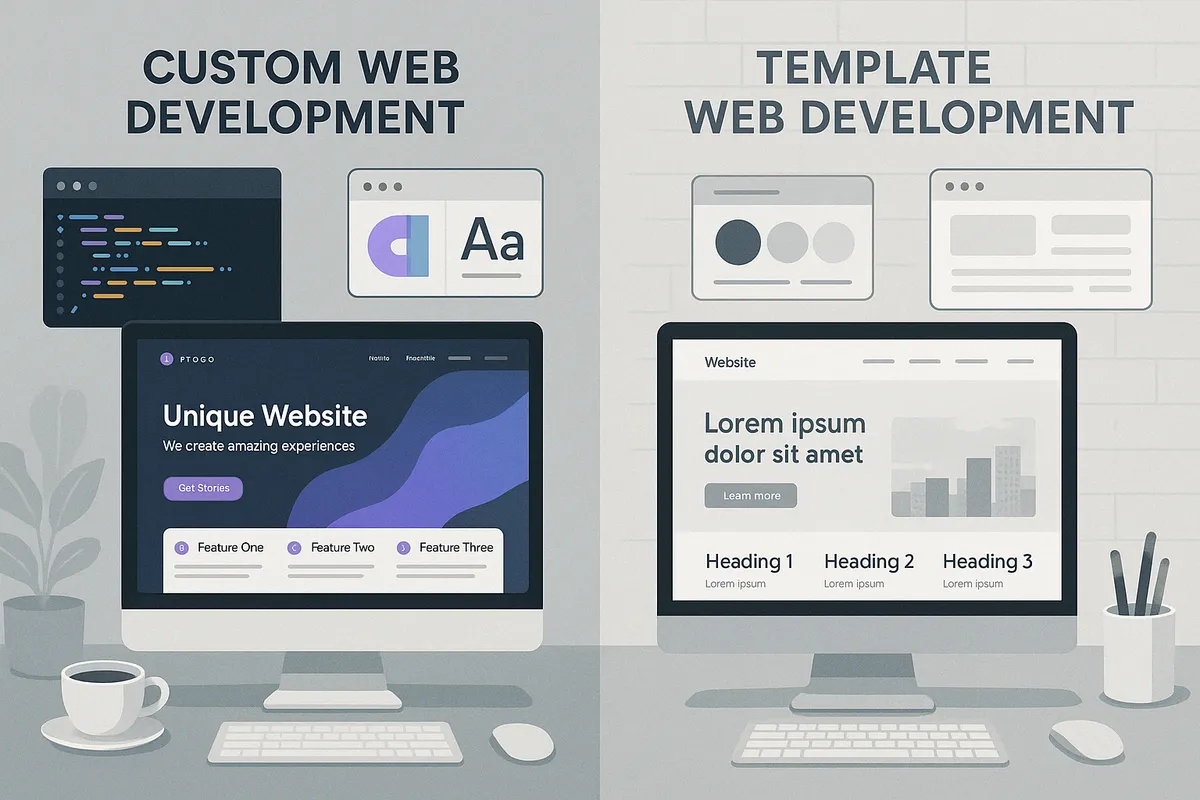
I like to think of templates as rental apartments and custom websites as homes built just for you. The apartment is move-in ready, but it wasn't designed with your specific needs in mind.
| Aspect | Custom Development | Templates |
|---|---|---|
| Uniqueness | Custom to specific business needs | Similar to many other websites |
| Scalability | Built to grow with your business | Often limited by template constraints |
| Functionality | Custom features aligned with business goals | Limited to pre-built functionality |
| SEO Potential | Optimized code and structure for your specific needs | Generic SEO features |
| Initial Cost | Higher upfront investment | Lower initial cost |
| Long-term Value | Greater flexibility and reduced need for rebuilds | May require complete redesign as business grows |
Here in Gainesville, we've seen startups thrive when they invest in custom development that truly reflects their vision. One founder told us, "I didn't realize how much our template was holding us back until we switched to custom. Now our site works exactly how our business does."
Custom development creates a unique brand identity that helps you stand out in a crowded marketplace. When every startup in your niche is using the same three templates, a custom site immediately signals that you're different. Your users notice this too—custom development allows for custom user experiences that match exactly how your customers think and behave.
Behind the scenes, scalable architecture might be the biggest benefit. Custom solutions are built with your growth in mind, so you won't face the dreaded "our website can't handle our success" problem that can plague fast-growing startups using template solutions.
The competitive advantage of having features built specifically for your business model can't be overstated. If your startup has an innovative approach, shouldn't your website reflect that innovation rather than forcing your unique business into a generic template?
Another practical benefit is integration capabilities. Your business likely uses specific tools and platforms, and custom development ensures these integrate seamlessly with your website—no awkward workarounds required.
As we've detailed in our guide to Gainesville Custom Web Design Services, working with local developers who understand both the technical aspects and the business landscape can improve these benefits even further.
At GNV Web Design, we've partnered with numerous Gainesville startups to create custom websites that perfectly match their unique vision and growth trajectory. While templates might seem cost-effective initially, we've repeatedly seen how custom development pays dividends as businesses scale and evolve.
Cost Considerations for Startup Web Development
Let's face it—money matters, especially when you're launching a startup. Understanding what drives costs in web development for startups can help you make smart decisions that won't break the bank while still getting you the website your business deserves.
Factors Affecting Web Development Costs
When budgeting for your startup website, several key elements will influence the final price tag. The scope and complexity of your project naturally play a major role—a simple landing page costs far less than a full-featured e-commerce platform with custom integrations.
Custom designs with unique visual elements require more time and expertise than template-based approaches, directly impacting your bottom line. The technology stack you choose matters too; some cutting-edge technologies require specialized developers who command higher rates.
"We often see startups underestimate the impact of integrations on their budget," explains our lead developer at GNV Web Design. "Connecting your site with payment processors, CRM systems, or marketing tools adds complexity that affects both timeline and cost."
Don't forget about content creation either. Professional copywriting and high-quality images can significantly improve your site's effectiveness, but they also add to the overall investment. And if you're working with a tight launch deadline, expedited development typically requires additional resources and comes with premium pricing.
The MVP Approach to Cost Management
One of the smartest strategies we've seen successful startups employ is the Minimum Viable Product (MVP) approach. Rather than trying to build everything at once, this method focuses on creating a streamlined version of your website with just the essential features needed to enter the market.
"An MVP helps in testing the market, understanding customer preferences, and establishing a functional base for future improvements without a full-scale investment," explains a startup advisor from our research.
This approach works particularly well for Gainesville startups and those throughout Florida because it allows for:
- Focused development on only what's truly necessary
- Faster market entry with lower initial investment
- Data-driven decisions about future features based on actual user behavior
- Gradual scaling of both the website and associated costs
Cost-Effective Strategies
Beyond embracing the MVP philosophy, several practical strategies can help optimize your web development budget.
Adopting an agile development methodology breaks your project into manageable sprints, allowing for better resource allocation and continuous adjustments as you learn what works. This approach has helped many of our Gainesville clients avoid expensive mid-project pivots.
We also recommend prioritizing features by ROI. Focus first on elements that directly contribute to revenue generation or user acquisition, leaving nice-to-have features for later phases. This ensures your initial investment delivers maximum impact.
Leveraging open-source solutions can dramatically reduce development costs without sacrificing quality. Established frameworks and libraries provide tested functionality without building everything from scratch—something we frequently recommend to budget-conscious startups.
Perhaps most importantly, choosing the right development partner makes all the difference. At GNV Web Design, we understand startup constraints and work collaboratively with founders to suggest efficient solutions that balance immediate needs with long-term scalability.
Leveraging MVP Development for Startup Success
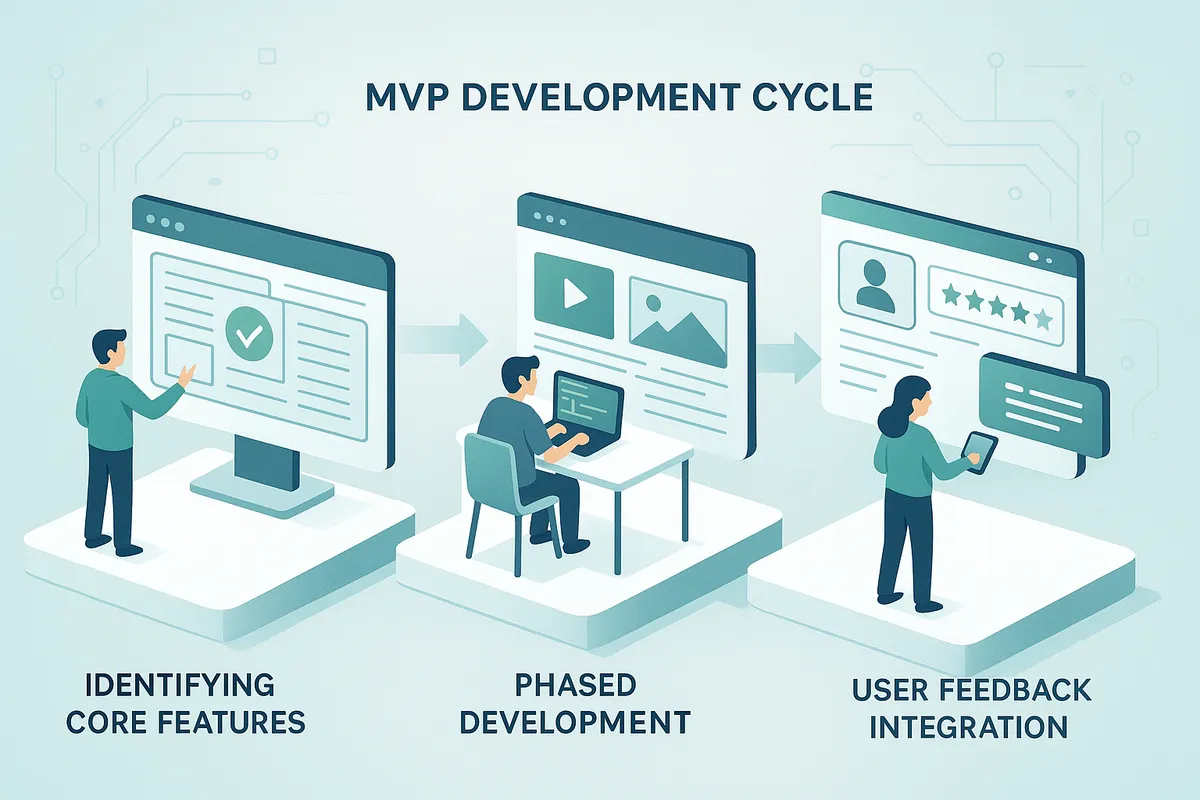
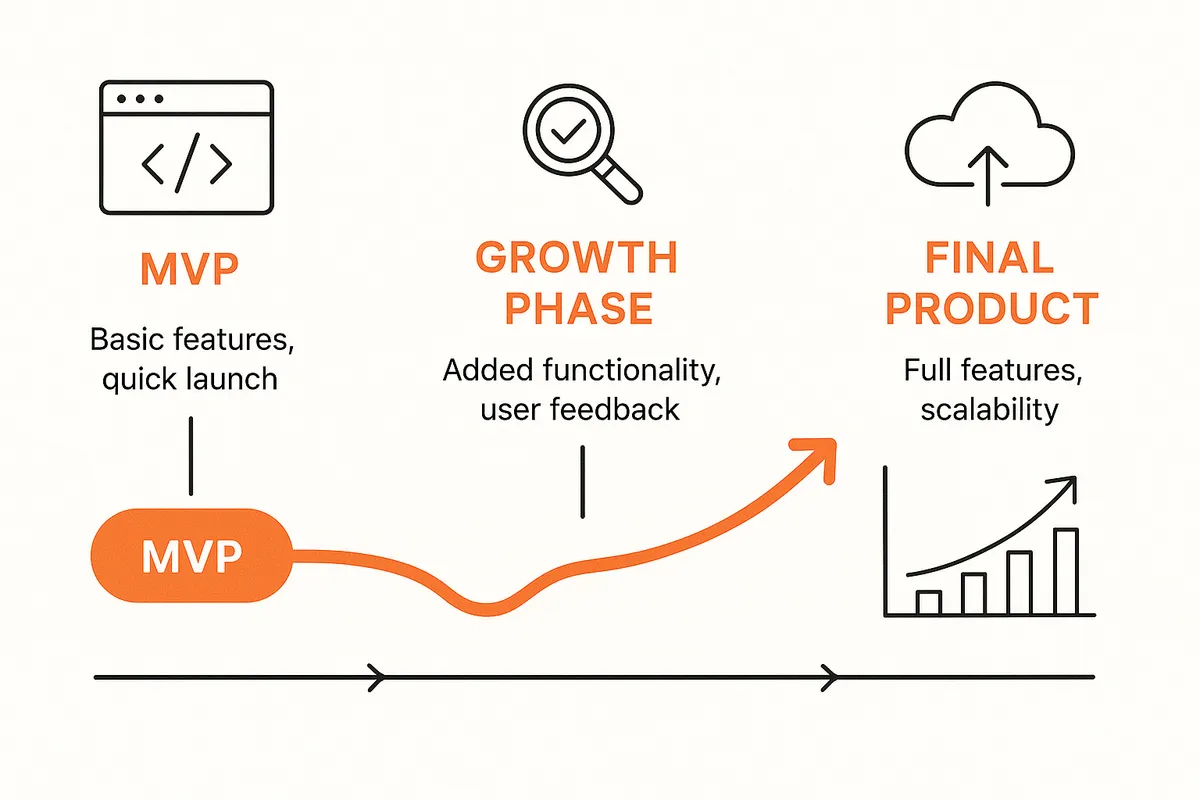
The Minimum Viable Product (MVP) approach has become a cornerstone of successful web development for startups. This strategy allows new businesses to enter the market quickly with a functional product that addresses core user needs, then iterate based on real-world feedback.
Understanding the MVP Concept
An MVP isn't a rough draft or a half-baked idea thrown together in haste. Think of it instead as your vision's essential essence - carefully distilled to its most powerful form.
A true MVP solves the core problem your users face without the bells and whistles that can delay your launch. It's fully functional and reliable, even with its streamlined feature set. Most importantly, it delivers genuine value to your early adopters - the people who will become your biggest champions if you solve their problems well.
As one industry expert told us, "Using an MVP as an early, low-risk method to validate a startup idea" is among the most valuable approaches in modern web development. It's like dipping your toe in the water before diving in - smart and strategic.
Benefits of the MVP Approach
For cash-strapped startups with big dreams, the MVP approach is a game-changer. You'll get to market faster when you focus only on core functionality - sometimes cutting development time in half. This means a much lower initial investment, which is music to the ears of bootstrapped founders and cautious investors alike.
Perhaps the most valuable benefit is early validation. Instead of spending months building features based on assumptions, you get real humans using your product and telling you what works and what doesn't. This real-world feedback becomes your roadmap, guiding your development priorities with actual data instead of guesswork.
Investors love this approach too. A functioning product with real users tells a much more compelling story than a beautiful pitch deck filled with theoretical concepts. As one startup founder shared with us, "We considered several Sydney web development houses before settling on Launch Lab, and have been pleased every step of the way." Finding a development partner who truly understands and accepts the MVP philosophy makes all the difference.
Implementing an Effective MVP Strategy
Success with an MVP starts before a single line of code is written. First, define clear metrics that will validate your concept - what specific user behaviors or feedback will tell you you're on the right track? Next, be ruthless about identifying only the truly essential features for launch. This is often the hardest part for passionate founders who want to include everything.
Even with a limited feature set, build with scalability in mind. Your technical architecture should be ready to grow alongside your success. Create simple but effective ways to gather user feedback - whether through in-app tools, surveys, or direct conversations. Then set a clear timeline for iterations based on what you learn.
Here in Gainesville and throughout Florida, we've helped dozens of startups implement this approach. Many have gone on to validate their concepts, secure funding, and build thriving businesses - all starting with a thoughtfully crafted MVP.
At GNV Web Design, we specialize in helping startups identify and build the perfect MVP - one that balances speed to market with quality and user experience. We understand that every feature decision has both cost and opportunity implications, and we'll help you steer those choices with confidence.
Choosing the Right Technologies for Your Startup
Picking the right tech stack for your startup isn't just a technical decision—it's a strategic one that can make or break your early momentum. As we've helped numerous Gainesville startups get off the ground, we've seen how technology choices impact everything from development speed to long-term scalability.
Front-End Technologies
The front-end of your website is like your digital storefront—it's what creates that crucial first impression with users.
React has become something of a superstar in the front-end world, and for good reason. Developed by Facebook and backed by a massive community, it gives startups incredible flexibility through its component-based architecture. According to the latest research on web development frameworks, React continues to dominate the landscape in 2025, making it easier to find developers when you need to scale your team.
Angular, Google's comprehensive framework, offers a more structured approach with everything built in. It's like buying a fully-furnished house instead of building room by room. This comes with a steeper learning curve, but can create more consistency for larger projects.
For startups seeking something between React's flexibility and Angular's structure, Vue.js has emerged as a popular middle ground. Its gentle learning curve means your team can get up to speed quickly—a real advantage when time is of the essence.
We've also seen great success with Next.js, which builds on React to add server-side rendering capabilities. This can significantly boost your performance and SEO right out of the gate—something particularly important for startups trying to establish their online presence.
Back-End Technologies
While users never directly see your back-end, it's the engine that powers everything behind the scenes.
Node.js has been a game-changer for many of our startup clients. Using JavaScript across both front and back-end means your developers can work more efficiently without constantly switching programming contexts. It's particularly powerful for real-time features like chat or live updates.
Python (with frameworks like Django or Flask) offers readable, clean code that's quick to develop and maintain. We've found it especially valuable for startups working with data analysis or machine learning components.
Ruby on Rails follows the "convention over configuration" philosophy, which can dramatically speed up development for startups with straightforward needs. When you're racing to launch your MVP, this acceleration can be invaluable.
For startups anticipating massive scale from day one, Java with Spring provides robust performance and reliability, though development might move a bit slower initially.
And don't count out PHP with Laravel—while it might not be the newest kid on the block, it powers a huge portion of the web and offers mature, battle-tested frameworks.
Database Technologies
Your database choice affects how you store, retrieve, and manage your startup's most valuable asset: data.
PostgreSQL has become our go-to recommendation for many startups in 2025. This powerful, open-source relational database handles complex queries beautifully while maintaining strict data integrity—crucial if you're in a regulated industry.
For startups with rapidly evolving data models, MongoDB offers flexibility that traditional relational databases can't match. It pairs particularly well with Node.js for a fully JavaScript stack.
MySQL/MariaDB remain solid choices with extensive community support and proven reliability over decades of use.
For the fastest possible MVP launch, Firebase combines database, authentication, and hosting services in one package. We've helped several Gainesville startups get to market in record time using Firebase, though it's important to consider potential limitations as you scale.
Technology Selection Criteria for Startups
When we sit down with local founders to discuss web development for startups, we focus on five key factors that should drive your technology decisions:
Team expertise matters enormously. If your technical co-founder or early hires already know certain technologies, leveraging that expertise can dramatically accelerate your timeline. There's rarely a technology advantage worth the cost of your entire team learning something new during the critical startup phase.
Community support translates directly to resources, troubleshooting help, and hiring pools. Choosing technologies with robust communities means you won't get stuck when challenges arise.
Scalability needs should be considered from day one. While you shouldn't over-engineer for hypothetical millions of users, choosing technologies that can grow with you prevents painful rewrites later. We've helped several startups in Gainesville transition from scrappy MVP to scalable architecture as they've grown.
Development speed is often the priority for cash-conscious startups. Frameworks like Rails or Laravel prioritize developer productivity, while others might offer better performance but slower development cycles.
Long-term maintenance considerations are easy to overlook in the excitement of launching. But remember—you'll likely be living with these technology choices for years. Trendy new frameworks come and go, but maintenance needs remain forever.
At GNV Web Design, we've guided dozens of startups through these technology decisions. For most early-stage ventures in 2025, we often recommend React paired with Node.js when flexibility and development speed are priorities. For content-focused businesses, a custom WordPress implementation often provides the perfect balance of established infrastructure with the customization startups need to stand out.
The right technology stack won't guarantee your startup's success—but the wrong one can certainly hold you back. Let's make sure your foundation is solid from day one.
Optimizing Your Startup Website for Search Engines
Let's face it—having an amazing startup website doesn't help much if nobody can find it! That's where Search Engine Optimization (SEO) comes in. For cash-strapped startups, organic traffic is often the most budget-friendly way to attract visitors who might become your customers.
SEO Fundamentals for Startups
When we build websites for startups here in Gainesville, we always start with solid keyword research. This means understanding what terms your potential customers are typing into Google when looking for solutions like yours. The trick is finding a good mix—those competitive terms everyone wants to rank for, plus those longer, more specific phrases (we call them "long-tail keywords") where you have a better chance of showing up near the top.
Your website's technical structure matters tremendously to search engines. Think of it as building a house with a solid foundation. Your site needs a logical URL structure that makes sense to both humans and search engines. You'll want an XML sitemap that essentially gives Google a roadmap of your content. And perhaps most importantly, your pages need to load quickly—nobody waits around for slow websites anymore, and Google knows this!
On-page optimization is where we make each individual webpage shine for specific keywords. This includes crafting compelling title tags that include your target keywords, writing meta descriptions that entice people to click, and using proper heading structure throughout your content. We also make sure to naturally incorporate keywords into your content—no keyword stuffing allowed! Images need descriptive alt text too, which helps both search engines and visitors using screen readers.
Your content strategy might be the most important piece of the SEO puzzle. Creating valuable resources that actually answer your audience's questions not only helps with rankings but also establishes your startup as an authority. Regular blog updates, comprehensive guides, and success stories all contribute to this authority while giving search engines fresh content to index.
As one expert noted in our research: "A website offers 24/7 online visibility, improves performance and speed, draws user attention, and builds brand status in the market." But this visibility depends heavily on implementing effective SEO practices from day one.
Mobile Optimization
With Google now using mobile-first indexing, how your site performs on smartphones matters more than desktop performance! A truly responsive design ensures your site works beautifully across all screen sizes—from tiny phones to giant monitors.
Navigation elements need to be touch-friendly (nobody likes trying to tap tiny buttons), and page speed becomes even more critical on mobile networks. We often consider implementing Accelerated Mobile Pages (AMP) for content-heavy pages to ensure lightning-fast loading times on mobile devices.
Local SEO for Startups
For startups with a local focus—whether you're here in Gainesville with us, or in Tampa, Jacksonville, or elsewhere in Florida—local SEO provides additional opportunities to connect with nearby customers.
Creating and optimizing your Google Business Profile is step one. Then we incorporate location-specific keywords throughout your site, seek backlinks from local business directories and partners, and for businesses with multiple locations, create dedicated pages for each one. These strategies help ensure that when someone searches for your services "near me," you're the business they find.
At GNV Web Design, we don't treat SEO as something to tack on after your website is built. Instead, we bake these best practices directly into the development process from the beginning. As we explain in our guide on Building Uniquely: How-To on Custom Website Development Solutions, this integrated approach ensures SEO is a fundamental part of your site's architecture, not an afterthought.
The results speak for themselves. Industry research shows that "on average, a company that prioritizes design sees a boost in profits of 32% and returns to shareholders of 56%." When that design focus includes smart SEO considerations, your startup's visibility and growth potential become even stronger.
Web development for startups should always include a comprehensive SEO strategy. It's not just about getting found today—it's about building a sustainable foundation for organic growth as your business scales.
The Role of UI/UX Design in Startup Success
User Interface (UI) and User Experience (UX) design aren't just pretty decorations for your startup website - they're essential ingredients in your recipe for success. Think of UI/UX as the digital handshake between your business and potential customers. When done right, this handshake feels natural, builds trust, and leaves users wanting more.

Understanding UI/UX in the Startup Context
For startups with limited resources and fierce competition, great design does some heavy lifting. Research shows that nearly half (48%) of people judge a business's credibility based on website design alone. That first impression happens in milliseconds, and you rarely get a second chance to make it.
Effective UI/UX design helps your startup stand out in several crucial ways. In crowded markets, an intuitive, memorable design creates differentiation when products or services might seem similar. Professional design also signals credibility - something particularly valuable when you're the new kid on the block without years of testimonials behind you.
There's a practical business side too. When users intuitively understand how to use your site, they need less support. This means fewer confused emails and support tickets, freeing up your small team to focus on growth.
Perhaps most importantly, thoughtful design directly impacts your bottom line. Clean user journeys lead to higher conversion rates, while satisfying experiences encourage people to come back again and again. As one design expert noted in our research: "Emotional connections fostered by thoughtful design are key to winning over customers." These emotional bonds transform casual visitors into passionate advocates.
Key UI/UX Principles for Startups
When we work with startups in Gainesville and throughout Florida on web development for startups, we emphasize several core principles that deliver the biggest bang for your buck.
Simplicity reigns supreme in startup design. Your brilliant idea might have many facets, but overwhelming users with too many options or information creates decision paralysis. Instead, focus on guiding visitors toward key actions - whether that's signing up, requesting a demo, or making a purchase.
Consistency creates comfort. When buttons, navigation, terminology and interactions follow predictable patterns throughout your site, users can focus on your content rather than figuring out how things work on each page.
Feedback matters - users need to know their actions had an effect. This might be as simple as a button changing color when clicked or a friendly message confirming their form submission went through.
Accessibility isn't optional. Designing for users of all abilities isn't just ethically right - it expands your potential customer base and often improves the experience for everyone.
Performance is part of design. The most beautiful interface in the world won't matter if users abandon it while waiting for pages to load. Speed and responsiveness are fundamental to good UX.
Visual hierarchy guides attention to what matters most. Through thoughtful use of size, color, contrast, and positioning, you can subtly direct users' eyes to the most important elements first.
Implementing Effective UI/UX in Startup Development
The good news for budget-conscious startups is that effective UI/UX doesn't necessarily require massive investment. Here at GNV Web Design, we've helped startups across Florida implement practical approaches that deliver results without breaking the bank.
Start with even limited user research. Understanding who your users are and what they need provides invaluable guidance for design decisions. Create representative profiles (personas) of your target users to keep their needs front and center throughout development.
Rather than trying to perfect every aspect of your site at once, identify and optimize the most critical paths users take. For an e-commerce startup, this might be the journey from product findy to checkout. For a SaaS company, it could be the sign-up and onboarding process.
Test ideas before investing heavily in development. Low-fidelity prototypes - even simple sketches or wireframes - can reveal usability issues early when they're much cheaper to fix. As you gather feedback, continuously refine your design through thoughtful iteration.
At GNV Web Design, we frequently get asked: "How do you prioritize usability and user experience while designing websites?" Our approach begins with understanding each startup's specific goals and constraints. We then apply proven design principles within those parameters to create interfaces that feel natural and enjoyable.
Web development for startups requires balancing immediate needs with long-term vision. By integrating UI/UX considerations from the beginning, we help Gainesville startups create digital experiences that not only look good but actually work to achieve business goals. The result? Websites that convert visitors into customers and casual users into loyal fans.
Ensuring Security and Data Protection
When it comes to web development for startups, security isn't just a technical checkbox—it's a business essential. Think of it like building a house: no matter how beautiful the design, if you don't have solid locks on the doors, you're inviting trouble.
Security breaches can be especially devastating for startups. You're working hard to build trust with your first customers, and a single data breach can undo all that work overnight. Not to mention the potential financial and legal headaches that follow.
Essential Security Practices
The good news is that implementing strong security doesn't have to be overwhelming. Start with the basics: HTTPS implementation is non-negotiable these days. Not only does it encrypt data between your users and your site, but Google also favors secure sites in search rankings. It's a win-win.
Strong authentication is your next line of defense. Those "password must contain a special character" rules exist for a reason! Implement robust password policies and consider multi-factor authentication for sensitive operations. You're not just protecting your business—you're protecting your users' data too.
"Web applications must be secure against threats like XSS attacks by controlling allowed scripts via CSP," notes a security expert from our research. This might sound technical, but it highlights an important point: security needs to be built into your site from day one, not tacked on later.
Encrypting sensitive data both during transmission and storage is another crucial step. Think of encryption as your data's personal bodyguard—it ensures that even if someone manages to access information, they can't actually read or use it.
Regular updates might seem mundane, but they're one of your strongest defenses. Most security breaches exploit known vulnerabilities that have already been fixed in updates. At GNV Web Design, we help our Gainesville clients implement maintenance schedules that keep their sites secure without disrupting business.
Compliance Considerations
Depending on your startup's focus, you may need to steer specific regulatory requirements. If you're serving European customers, GDPR compliance is essential. California has its own privacy laws (CCPA/CPRA) that affect many U.S. businesses.
Health-related startups face particularly strict requirements under HIPAA, as detailed in guides on HIPAA compliance for medical software applications. And if you're handling credit card information, PCI DSS compliance isn't optional—it's mandatory.
These regulations might seem daunting, but they actually provide a helpful framework for protecting your users' data. Here in Florida, we've helped numerous startups implement compliant systems that protect sensitive information without creating friction for users.
Security in the Development Process
The most effective approach to security is integrating it throughout your development process. Rather than treating it as a final quality check, make security part of every conversation from day one.
This starts with clearly defining security requirements alongside your functional requirements. What sensitive data will your application handle? What are the specific threats you need to guard against? Answering these questions early saves headaches later.
Secure coding practices should become second nature for your development team. Regular code reviews with a security focus help catch vulnerabilities before they make it to production. Automated security testing tools can be integrated into your development pipeline to provide an additional safety net.
Even with these measures in place, it's worth investing in periodic penetration testing by security professionals who can think like attackers. They often find vulnerabilities that automated tools miss.
Finally, hope for the best but plan for the worst with a clear incident response plan. Knowing exactly what steps to take if a security issue occurs can dramatically reduce the impact.
At GNV Web Design, we've found that our Gainesville clients appreciate our proactive approach to security. By addressing these concerns from the beginning of the development process, we help startups build trust with their users from day one—and avoid the costly and reputation-damaging effects of security problems down the road.
Overcoming Common Web Development Challenges
Every startup journey comes with its share of roadblocks, and web development for startups is no exception. The path from concept to launched website is rarely smooth, but understanding common challenges and having strategies to overcome them can make all the difference.
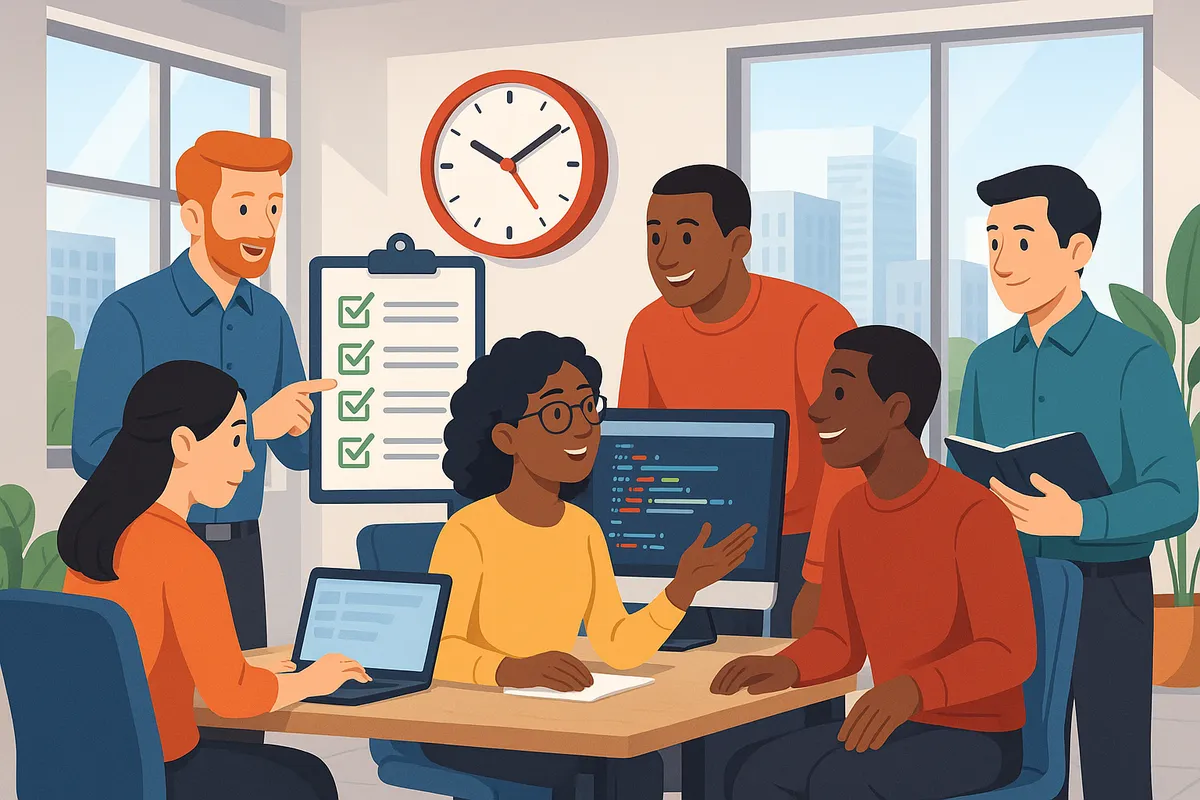
Time Constraints
The startup world moves at lightning speed. When investors are waiting and competitors are gaining ground, the pressure to launch quickly becomes intense.
Time is perhaps the most precious resource for any new venture. Many founders find themselves caught between the desire for a perfect product and the need to get something—anything—to market before their runway disappears.
"A well-adjusted, structured development workflow is essential to achieving efficiency in time, resources, and cost," explains one development expert we interviewed. This structure doesn't happen by accident.
The most successful startups tackle time constraints by prioritizing ruthlessly, focusing only on features that directly support core business objectives. They accept agile methodologies, breaking development into manageable sprints with clear deliverables. Rather than reinventing the wheel, they leverage existing components like frameworks and APIs to accelerate development.
Many also consider a phased launch approach, getting core functionality to market quickly while planning future releases for additional features. This strategy allows for gathering real user feedback early—often revealing that some planned "essential" features aren't actually needed at all.
Budget Limitations
When every dollar counts, budget constraints can feel suffocating. Most startups operate with limited financial resources, making smart money management crucial to survival.
At GNV Web Design, we've seen Florida startups stretch their development budgets in creative ways without sacrificing quality. The MVP approach remains the gold standard—building only what's necessary to validate your concept before investing in bells and whistles.
Working with developers who offer fixed-scope contracts provides budget predictability, eliminating the fear of costs spiraling out of control. Many successful startups also make strategic use of open-source solutions for components that don't need to be built from scratch.
Perhaps most importantly, savvy founders prioritize by ROI, investing first in features that directly drive revenue or user acquisition. That stunning animation might look impressive, but if it doesn't convert visitors into customers, it might need to wait for version 2.0.
Technical Expertise Gaps
Not every great business idea comes from someone with a computer science degree. Many startup founders lack technical backgrounds, making it challenging to manage development effectively or even know if they're getting quality work.
This knowledge gap can lead to miscommunication, unrealistic expectations, and sometimes expensive mistakes. The solution isn't necessarily to become a coding expert overnight, but rather to build bridges across the expertise divide.
Finding a trusted development partner experienced in guiding non-technical founders can be transformative. These relationships work best with clear communication at their foundation—ensuring requirements and expectations are thoroughly documented and understood by both parties.
"There are no barriers to communication which is the single most important thing in project delivery," notes one CEO from our research. This emphasis on open dialogue prevents the all-too-common scenario where what gets built doesn't match what was envisioned.
Many startups also benefit from investing in project management tools that provide visibility into development progress, and some bring in technical advisors on a part-time basis to help with oversight and decision-making.
Balancing Quality and Speed
The tension between moving quickly and maintaining quality is perhaps the most delicate balancing act in web development for startups. Cut corners too aggressively, and you risk launching something that undermines user trust. Move too cautiously, and your competition might beat you to market.
"Startup website development demands more creativity and strategic planning," emphasizes one industry expert. This creative approach helps balance competing priorities effectively.
Smart startups implement automated testing to catch issues early without slowing down development. They use continuous integration pipelines to maintain quality standards during rapid development cycles. Even with tight timelines, they make time for user testing with early versions to identify major usability issues before launch.
They also recognize when technical compromises are necessary, practicing intentional technical debt management—acknowledging when shortcuts are taken and planning for addressing them in future development cycles.
Scaling Challenges
Initial success brings its own challenges. Solutions that work perfectly for your first hundred users may buckle under the weight of thousands or millions. Many startups face painful rebuilds when their initial architecture can't scale with growth.
Here in Gainesville and throughout Florida, we focus on creating solutions that grow alongside the business. This means designing with a scalable architecture from day one, even if certain components remain simplified in early versions.
Leveraging cloud-based infrastructure allows for flexible scaling based on actual demand rather than projected needs. Implementing performance monitoring tools helps identify bottlenecks before they become critical failures. And embracing modular design principles ensures components can be improved or replaced individually without requiring system-wide overhauls.
The challenges of startup web development may be numerous, but they're far from impossible. With the right strategies and partners, these potential roadblocks can become opportunities to build something truly exceptional—a digital foundation strong enough to support your business vision as it grows from concept to reality.
Implementing Mobile-First Strategies
In today's digital landscape, mobile-first development has become essential for web development for startups. With mobile devices accounting for approximately 60% of web traffic globally, prioritizing the mobile experience is no longer optional—it's a necessity for success.

Understanding Mobile-First Development
Mobile-first development flips the traditional design process on its head. Instead of creating a website for desktop and then scaling it down, we design for the smallest screen first and progressively improve the experience for larger devices.
This approach offers several compelling advantages for startups. For one, the limited screen space forces you to prioritize what truly matters—your core content and features. There's simply no room for fluff on mobile, which leads to clearer messaging and more focused user journeys.
Performance optimization naturally follows this approach too. Mobile-first sites tend to be leaner and faster, which benefits all users regardless of their device. And with Google's mobile-first indexing determining search rankings, mobile-optimized sites typically enjoy better visibility.
"Mobile commerce is increasingly in demand, making responsive mobile solutions critical," notes an industry expert from our research. This trend is particularly relevant if you're launching an e-commerce startup or targeting younger, mobile-savvy demographics.
Key Mobile-First Development Principles
When we implement mobile-first strategies for Gainesville startups (and businesses throughout Florida), we focus on creating experiences that feel natural and intuitive on smaller screens.
Responsive design forms the foundation of this approach. Rather than maintaining separate mobile and desktop versions, responsive design creates layouts that adapt fluidly to different screen sizes. This saves development time and ensures consistency across devices.
Touch-friendly interfaces are equally important. Think about the difference between clicking with a precise mouse pointer versus tapping with a finger. Mobile interfaces need larger tap targets—ideally at least 44x44 pixels—with adequate spacing to prevent frustrating mis-taps.
Navigation deserves special attention too. The expansive navigation bars that work well on desktop often become unwieldy on mobile. Instead, we implement simplified navigation patterns like hamburger menus or bottom navigation bars that preserve screen real estate while maintaining accessibility.
Performance optimization becomes even more crucial on mobile, where users might be on spotty cellular connections. We compress images, minimize code bloat, and implement techniques like lazy loading to ensure your site loads quickly even in less-than-ideal network conditions.
The principle of progressive improvement ties everything together. We ensure core functionality works flawlessly on the smallest screens, then thoughtfully add more complex features and visual elements as screen real estate increases.
Progressive Web Applications (PWAs)
For many of our startup clients in Gainesville, Progressive Web Applications offer an exciting sweet spot between traditional websites and native mobile apps.
PWAs combine the best of both worlds. They're accessible through browsers like regular websites, but offer app-like experiences including offline functionality—perfect for users with spotty connections. They can send push notifications to re-engage users, just like native apps. And perhaps most appealingly for budget-conscious startups, a single PWA can replace both a website and native mobile apps, significantly reducing development and maintenance costs.
"PWA development to adhere to the mobile-first approach" is recommended by development experts as a cost-effective strategy for startups with limited resources. At GNV Web Design, we've seen how this approach helps our clients stretch their development budgets further while still delivering exceptional mobile experiences.
Testing Mobile Experiences
All the mobile-first principles in the world won't help if your implementation falls short in real-world conditions. That's why thorough testing is essential.
We always test on actual physical devices—not just emulators—across various screen sizes and operating systems. The experience of holding a phone and navigating with your thumb reveals usability issues that aren't apparent when clicking around on a desktop emulator.
We evaluate loading times and responsiveness under different network conditions too. Your site might load instantly on office Wi-Fi, but how does it perform on a 3G connection or with periodic dropouts? These real-world scenarios matter tremendously to user experience.
Perhaps most valuably, we observe real users interacting with mobile interfaces to identify friction points. People often use mobile devices differently than we might expect, and these insights help us refine the experience.
At GNV Web Design, we implement comprehensive mobile testing throughout the development process for startups across Florida, ensuring that mobile users receive an excellent experience from day one. After all, for many potential customers, their mobile experience will be their first—and possibly only—impression of your startup. We make sure it's a good one.
Hiring the Right Web Development Team
Finding the right development partner is perhaps the most critical decision in web development for startups. The right team can accelerate your time to market, build a scalable foundation, and help you avoid costly mistakes.

Evaluating Web Development Partners
When you're ready to bring your startup vision to life, the team you choose makes all the difference. Here in Gainesville and throughout Florida, we've seen how the right partnership can transform a startup's trajectory.
Start by thoroughly examining a potential partner's portfolio. Look beyond the surface-level aesthetics to evaluate the functionality and performance of their past projects. Pay special attention to any work they've done in your industry or with similar technical requirements. A beautiful website that loads slowly or breaks on mobile devices won't serve your startup well, no matter how impressive it looks at first glance.
Technical expertise matters, but perhaps not in the way you might think. Rather than focusing solely on mastery of specific technologies, look for teams that demonstrate adaptability and problem-solving skills. Startups often pivot and evolve, so you need partners who can evolve with you.
The development process itself reveals a lot about a potential partner. Teams that accept agile methodologies tend to work well with startups, delivering valuable iterations quickly rather than disappearing for months before showing progress. Ask about their approach to gathering requirements, how they handle testing, and what their deployment process looks like.
Communication style can make or break your development experience, especially if you don't have a technical background yourself. During initial conversations, notice how well they translate complex concepts into terms you understand. Do they listen carefully to your needs, or do they seem more interested in pushing their own agenda?
Finally, don't skip checking references. A quick conversation with past clients, particularly other startups, can provide invaluable insights that you won't get from a portfolio review or sales pitch.
In-House vs. Agency vs. Freelancers
Startups typically face three main options when building their web presence, each with distinct advantages and challenges.
In-house development gives you the most direct control and deepest integration with your company culture. Your developers are fully dedicated to your vision and available for quick iterations. However, this approach typically comes with higher costs, not just in salaries but in recruitment time and benefits. Many startups also struggle to attract top talent when competing with established companies.
Agency partnerships like what we offer at GNV Web Design provide access to diverse skill sets without the overhead of full-time employees. A good agency brings established processes, scalable resources, and the combined experience of many projects. While potentially more expensive than freelancers, agencies offer reliability and comprehensive support that often justifies the investment.
Freelance developers can be budget-friendly and offer flexibility, which appeals to many cash-strapped startups. The challenge lies in finding reliable professionals who can dedicate sufficient time to your project and communicate effectively throughout the process. Many startups find themselves managing multiple freelancers with different availability and communication styles, which creates its own overhead.
For most early-stage startups we work with across Gainesville, Tampa, and beyond, a boutique agency partnership offers the sweet spot of expertise, reliability, and cost-effectiveness.
The Importance of Cultural Fit
Beyond technical capabilities, the cultural alignment between your startup and development team profoundly impacts your project's success. This isn't about whether you enjoy the same office snacks – it's about fundamental approaches to work and problem-solving.
Look for teams that understand the , iterative nature of startups. Developers who have only worked with established enterprises may struggle with the uncertainty and rapid changes common in startup environments. During conversations, notice whether potential partners seem energized or overwhelmed by your timeline and vision.
The best partnerships happen when development teams genuinely believe in what you're building. Their excitement translates into attention to detail, proactive suggestions, and going the extra mile when challenges arise. Ask potential partners what aspects of your project interest them most – their answers will tell you a lot.
Problem-solving approaches reveal a team's true character. Do they blame external factors when discussing past challenges, or do they focus on how they adapted and found solutions? Startups inevitably face unexpected problems, so you need partners who remain calm and creative when things don't go as planned.
Proactive communication saves countless headaches in development projects. The best partners don't wait for you to ask questions – they regularly share progress, raise concerns early, and suggest improvements based on their expertise. During initial interactions, notice whether they volunteer information or simply respond to your direct questions.
Key Questions to Ask Potential Partners
When interviewing potential development teams, the questions you ask can reveal far more than their technical capabilities. We've found that startups who dig deeper during these conversations tend to make better partnership decisions.
Ask how they approach MVP development and feature prioritization. Their answer will show whether they understand the startup mindset of building just enough to validate ideas before investing in comprehensive features. A good partner will explain how they help clients distinguish between essential features and "nice-to-haves" that can wait for future iterations.
Inquire about their process for gathering and implementing feedback. Development isn't a one-way street – it's a collaboration that improves through regular feedback cycles. Strong partners will describe specific tools and timeframes for reviewing progress and making adjustments.
Find out how they handle scope changes and new requirements. Startups rarely follow a perfectly straight path, so flexibility matters tremendously. Listen for how they balance accommodating changes while maintaining project momentum and budget considerations.
Ask what technologies they recommend for your specific needs and why. Their answer should demonstrate thoughtful consideration of your unique requirements rather than a one-size-fits-all approach. Be wary of teams that always use the same stack regardless of project needs.
Discuss how they'll ensure your solution can scale as you grow. Many startups outgrow their initial technical implementations, requiring costly rebuilds. Partners with foresight will explain architectural decisions that allow for expansion without starting from scratch.
Finally, ask what happens after launch in terms of support and maintenance. The relationship shouldn't end when your site goes live – ongoing support ensures your digital presence continues to serve your business as it evolves.
At GNV Web Design, we've guided numerous startups throughout Florida through this selection process, helping them find the right fit for their unique needs. As detailed in our article Crafting Digital Dreams, we believe the most successful digital projects grow from true partnerships built on mutual understanding and shared goals.
Frequently Asked Questions about Web Development for Startups
What Are the Essential Elements of a Successful Startup Website?
When you're launching a startup website, certain elements can make or break your online presence. At the heart of every successful startup site is a clear value proposition – visitors should instantly understand what you're offering and why they should care about it.
Think about your own online behavior. When you land on a confusing website, how long do you stick around? That's why intuitive navigation is non-negotiable. Your users should find what they need without having to think too hard about it.
In today's mobile-first world, responsive design isn't just nice to have – it's essential. Your site needs to look great and function perfectly whether someone's viewing it on a smartphone, tablet, or desktop. And speaking of functioning well, fast loading speed can dramatically impact your success. We've seen the research showing that 40% of visitors will abandon a site that takes more than 3 seconds to load. That's a lot of potential customers lost over a few seconds!
Compelling calls-to-action guide your visitors toward the next steps, whether that's signing up for your service, requesting a demo, or making a purchase. These CTAs should be obvious without being obnoxious.
Don't forget about building trust. Elements like testimonials, client logos, security badges, and clear contact information help establish credibility with potential customers. As one expert told us, "A website offers 24/7 online visibility, improves performance and speed, draws user attention, and builds brand status in the market."
Finally, even the most beautiful website won't help your business if no one can find it. Basic search engine optimization ensures your startup gains visibility with potential customers searching for solutions like yours.
How Does MVP Development Benefit Startups?
The Minimum Viable Product (MVP) approach has revolutionized how startups approach web development for startups, and for good reason.
Think of an MVP as your startup's first impression – it includes just enough features to solve your core customer problem while giving you valuable insights into what your audience actually wants. This approach offers several game-changing benefits.
First, you'll achieve faster market entry. By focusing only on essential functionality, you can launch quicker and start collecting real-world feedback while your competitors are still perfecting features nobody asked for. This speed also translates to cost efficiency – developing only what's truly necessary preserves your precious startup capital for other critical needs like marketing or hiring.
The MVP approach also significantly reduces risk. Testing your core concept with actual users before investing in full-scale development means you're less likely to build something the market doesn't want. As one development expert shared with us, "An MVP allows startups to test core functionalities and gather customer feedback with minimal investment, making it easier to validate and refine their ideas before a full-scale launch."
Having a functioning product with real users also makes your startup much more attractive to potential investors. A working MVP with engaged users tells a much more compelling story than wireframes or prototypes alone.
Perhaps most importantly, the MVP process forces your team to identify what's truly essential. This focused development approach prevents feature bloat and helps maintain clarity about what problem you're really solving.
How Can Startups Ensure Their Website Is Optimized for Search Engines?
For most startups, organic search traffic represents one of the most cost-effective ways to acquire customers. But how do you make sure people can actually find you?
Start with thorough keyword research to understand what terms your target audience uses when looking for solutions like yours. Focus on a mix of competitive terms and more specific long-tail keywords where you have a better chance of ranking well.
The technical foundation of your site matters tremendously for SEO. Ensure your site loads quickly, works perfectly on mobile devices, has a logical URL structure, and includes an XML sitemap and robots.txt file. These technical SEO elements might seem boring, but they're absolutely critical for search visibility.
On each page, pay attention to on-page optimization elements. This includes creating unique, descriptive title tags that incorporate your target keywords, crafting meta descriptions that encourage clicks, using proper heading structure, optimizing images with alt text, and creating meaningful internal links between relevant pages.
Your content strategy plays a huge role in SEO success. Create valuable, comprehensive content that addresses common questions in your industry. Update this content regularly and include a mix of formats like blog posts, guides, and case studies. Quality content not only helps with rankings but also positions your startup as a trusted authority.
If your startup has a local component, don't overlook local SEO tactics. Create and optimize your Google Business Profile, include location-specific keywords in your content, and get listed in relevant local directories.
"How do you plan to optimize our website for search engines?" is one of the most common questions we hear from startups in Gainesville and throughout Florida. At GNV Web Design, we integrate these SEO best practices throughout the development process, ensuring your site has a strong foundation for organic growth right from launch day.
Conclusion
Navigating web development for startups is a bit like building a ship while you're already sailing – exciting, challenging, and absolutely critical to get right. Throughout this guide, we've explored how startups can create effective websites that don't just look pretty but actually drive business growth in 2025 and beyond.
When you're launching a startup in 2025, every decision matters – especially when it comes to your digital presence. The approach you take to web development can make the difference between smooth sailing and rough waters ahead. We've seen how startups that approach web development strategically tend to grow faster and more sustainably than those who treat it as an afterthought.
Successful web development for startups isn't about implementing every bell and whistle from day one. It's about starting with a clear MVP that validates your core ideas, then building upon that foundation as you grow. This approach not only conserves your precious startup capital but also allows you to adapt based on real user feedback rather than assumptions.
Technology choices matter tremendously in the startup world. The stack you select today will either empower your growth or become a limitation down the road. That's why we've emphasized scalable technologies that can grow with your business – whether that's React and Node.js for complex applications or carefully customized WordPress solutions for content-focused businesses.
User experience isn't just a nice-to-have for startups – it's essential. Your website often forms the first impression potential customers have of your business. A thoughtfully designed interface that guides users naturally toward conversion can significantly impact your startup's trajectory.
For startups in Gainesville, Tampa, Jacksonville, and throughout Florida, we at GNV Web Design understand the unique challenges you face. We've helped numerous local startups transform their digital presence from basic websites into powerful business tools. Our approach combines strategic thinking with hands-on development expertise, ensuring that your website not only looks great but actually delivers results.
What sets our work apart is our commitment to being true partners in your journey. We don't just build websites and disappear – we provide ongoing support, guidance, and improvements as your startup evolves. This relationship-focused approach has helped many Florida startups scale successfully without needing to rebuild their digital foundation from scratch.
Whether you're at the earliest stages of validating your concept or ready to scale an established startup, investing in quality web development for startups pays dividends in credibility, user engagement, and ultimately, business growth. The right development partner will understand both the technical requirements and the business context of your project.
Ready to take your startup's web presence to the next level in 2025? Learn more about our services or reach out for a friendly, no-pressure conversation about your needs. Our Gainesville team is passionate about helping startups succeed through smart, strategic web development.

