
 352-639-5270



Is AI killing your website traffic? Learn why Google AI Overviews are reducing clicks, how to diagnose the problem, and proven strategies to recover lost organic traffic.
What's Really Causing Your Traffic to Drop
You've checked Google Search Console three times this week. Impressions are stable. Clicks are down 20%, 30%, sometimes 40%. You haven't changed anything. Rankings look fine. So what happened?
If you're a small business owner and your website traffic dropped sometime between late 2024 and now, you're not alone. Chartbeat's March 2026 analysis found that small publishers lost 60% of their search referral traffic, while large publishers lost only 22%. The difference isn't random. It's structural. It has a name: AI Overviews.
Here's what matters: this isn't a penalty. Your website didn't get worse. Google didn't stop liking you. The rules changed. Unlike a lot of search changes, this one is actually fixable if you understand what's happening.
Understanding AI Overviews and the Zero-Click Problem
Google AI Overviews are those boxes at the top of search results. You've seen them. Someone searches "how to fix a leaky kitchen faucet" and Google's AI pulls a summary from multiple sources. The person reads it and leaves. No click to any website.
Here's what's happening to your traffic. According to Metricusapp's 2025-2026 data, organic click-through rate drops 61% when an AI Overview appears. That's not a small dip. That's a cliff. And these overviews are everywhere now. Searchlab found that AI Overviews appear in 48% of Google searches as of March 2026.
The real number is worse. Semrush's recent research shows that 60% of Google searches now end without any click at all. The user gets their answer from the search results page and never visits a website. This is the zero-click problem. It's the main reason your traffic is down even though your rankings look fine.
Small businesses are getting hit hardest because of which queries trigger AI Overviews. Searchlab found that informational queries trigger AI Overviews 39.4% of the time. Commercial queries trigger them 22.2% of the time. E-commerce queries? Just 4%. If your business publishes educational and how-to content, you're taking a direct hit.
Why Small Businesses Are Hit Hardest
Large publishers and big brands have something small businesses don't: diversity. A big news site gets traffic from brand searches, from links, from newsletters, from social. When AI Overviews cut their informational traffic, they've still got other channels. Small businesses typically depend on search traffic almost exclusively. One algorithm shift and it shows immediately in your analytics.
How to Tell If AI Is Actually Eating Your Traffic
Before you assume AI is the culprit, diagnose what's actually happening. A lot of business owners assume they're losing traffic to AI when they're really dealing with a tracking error, a technical issue, or a real algorithm change. The diagnostic is simple. It matters.
The Search Console Diagnostic
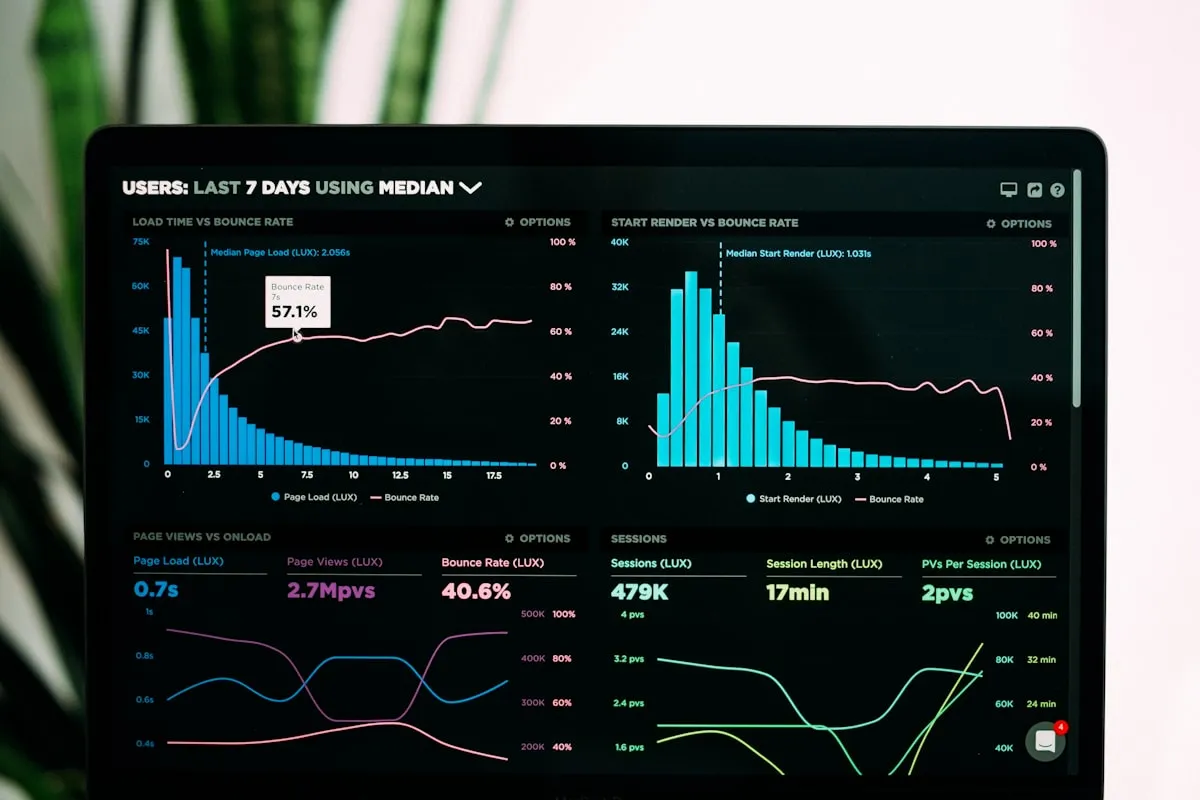
Open Google Search Console and look at your last 12 months of data. Pull your impressions and clicks side by side. If your impressions are stable but your clicks are down, AI Overviews are likely the culprit. Google is still showing your page in results, that's the impression. Users aren't clicking, that's the missing click. That's the AI signature.
If both impressions and clicks are down together, something else is happening. Maybe you dropped rankings. Maybe the algorithm shifted. Maybe you've got a technical issue. Cross-reference your Search Console data against your rankings in a tool like Semrush or Ahrefs. That'll tell you whether it's a visibility problem or a click-through problem.
Ruling Out Tracking Errors
Not every traffic drop is real. Check your GA4 data against your Search Console data. If GSC shows 500 clicks but GA4 shows 200 sessions, you've likely got a tag implementation issue or a UTM parameter problem. Fix that before you overhaul your SEO strategy.
Three Ways to Adapt Your SEO Strategy Right Now
Traffic is down. SEO isn't dead. It's evolved. Here's what works in a zero-click world.
Write for Complexity, Not Keywords
AI Overviews handle simple questions well. They struggle with nuanced, multi-part content that requires context or expertise. If your content is generic and broad, it's vulnerable. If it's specific, opinionated, and thorough, AI actually tends to cite it.
Focus on niche angles instead of broad topics. Write "Why cartridge faucets leak at the stem and three fixes a homeowner can do in under an hour" instead of "How to fix a leaky faucet." Write about your specific approach to AI and search engine optimization with real examples from your clients, not generic SEO tips. Complexity is your moat.
Embed Experience and Authority
E-E-A-T signals matter more now because AI Overviews actually prefer authoritative sources. If your page cites real studies, references case studies, and embeds actual data, Google's AI is more likely to pull from you than from a generic blog. You become the source AI quotes from. That brings referral traffic even in a zero-click world.
Video content is appearing more often in AI Overviews too. If you've got expertise that works on video, that's an edge worth using.
Build Owned Channels Alongside SEO
Email, video, and social aren't replacements for SEO. They're parallel channels. You don't control Google's algorithm. You do control your email list and your social following. Diversify your traffic so one platform change doesn't crater your business.
The Mistakes Most Small Business Owners Make Right Now
I talk to a lot of business owners dealing with traffic drops, and there's a pattern. Most are assuming the answer is to abandon SEO and shift to paid ads or social. That's usually the wrong call.
The Real Cost of Switching to Paid Ads
Paid search costs keep climbing as everyone piles into ads. You pay per click. The moment you stop paying, traffic stops. Organic search compounds. A page that ranks today will bring you traffic for months or years. Build an email list from organic traffic and you own that relationship forever. Ads are speed. Organic is compounding. Speed feels safer when you're panicked. Compounding is what builds sustainable business.
Local and Service Businesses Have a Structural Advantage
Not all queries get AI Overviews equally. Local searches, service queries, and transactional queries trigger them far less often than informational ones. If you're a plumber in Gainesville or a tax accountant or a web design agency, AI Overviews are a smaller threat. Your queries are already intent-driven. People searching for a plumber in their town aren't reading an AI summary. They're looking for a phone number. Local SEO optimization remains as valuable as it's ever been.
How We Help Service Businesses Recover Traffic
We've seen service businesses recover traffic that dropped in 2024 and 2025. The recovery isn't magic. It's diagnosis followed by strategic adaptation. Here's what that actually looks like.
The Diagnosis Phase
We pull your Search Console data and map impressions against clicks over a 12-month window. We check your rankings, your technical health, and your tracking to isolate whether you're losing visibility or losing clicks. We look at which queries are being answered by AI Overviews and which ones still drive traffic. That diagnostic takes a week. It's specific to your account, not generic advice.
The Ongoing Adaptation
Once we know what happened, we adapt your strategy. That usually means rewriting content to be more specific and authoritative, building deeper topical clusters that are harder for AI to synthesize, and strengthening your E-E-A-T signals. We set up a real-time analytics dashboard so you can see week-to-week what's working. Our monthly SEO plans include this kind of ongoing iteration. We adjust as the algorithm changes, not every six months, but every four weeks.
If your website needs structural changes to be more visible in search, we can handle that too. SEO-engineered web design means building your site from the ground up to perform in search, not bolting SEO onto a design that wasn't built for it.
The Takeaway
Your traffic dropped because the search landscape shifted, not because your business is broken. AI Overviews are real. Zero-click is real. Small businesses are disproportionately affected. But that's not the end of SEO. It's a phase of it. The businesses that adapted quickly are already seeing traffic recover. The ones that switched to ads and pulled back from SEO are still struggling.
If you want a concrete look at what's happening in your account, we offer a free site audit that includes a breakdown of your traffic loss, what's causing it, and what specifically would recover it. No fluff. Just a video walkthrough of your data and a clear next step.
Traffic doesn't stay down forever. But it does stay down if you don't adapt.

