
 352-639-5270




Explore how 24/7 customer support meets modern expectations, enhances customer satisfaction, and drives global business growth.
Meeting Modern Customer Expectations: The Power of Always-On Support
24/7 customer support refers to providing uninterrupted assistance to customers at any time of day or night, throughout the year. It ensures customers can get help whenever they need it, regardless of time zones or business hours.
What is 24/7 customer support?
- A support model available 24 hours a day, 7 days a week, 365 days a year
- Can be delivered through multiple channels (phone, live chat, email, self-service)
- Combines human agents with automated tools like AI chatbots
- Designed to meet immediate customer needs without delays
How many times have you struggled with a product late at night, only to find that help was unavailable until the next business day? In today's digital world, customers expect immediate assistance whenever problems arise. Nearly half of all customers now consider round-the-clock support a crucial component of good service.
"A great customer experience starts and ends with one thing: getting help now," as industry experts point out. With global commerce operating across multiple time zones and online businesses functioning 24/7, the demand for always-available support has never been higher.
For small business owners, implementing 24/7 support might sound overwhelming, but it's increasingly becoming a competitive necessity rather than a luxury. Statistics show that 90% of Americans consider customer service when deciding whether to do business with a company. When customers know they can reach you anytime, they develop greater trust in your brand.
The importance of response time cannot be overstated. Research indicates that 75% of customers consider response time the most critical part of a great customer experience. When customers have questions or issues, waiting until the next business day often means losing them to competitors who offer immediate assistance.
Understanding 24/7 Customer Support
24/7 customer support is exactly what it sounds like: providing your customers with assistance around the clock, every day of the year. Essentially, it's about ensuring there's always someone ready and available to lend a helping hand, no matter where your customers are or what time zone they're in.
As Raquel Jacob, Director of Operations at Unbabel, explains: "24/7 support means customers can get help and find answers to questions as soon as they come up—24/7 and in real-time." Simply put, it's making sure you're there when your customers need you the most.
But today, true 24/7 customer support isn't just about having someone answer phone calls at all hours. Modern customer service involves multiple communication channels—including phone, live chat, email, social media, self-service knowledge bases, and even AI-powered chatbots.
And it's not hard to see why this matters so much. In fact, research shows that 90% of Americans use customer service as a deciding factor when choosing to do business with a company. With customers having more options than ever, the availability and quality of your support can make or break their decision to choose your brand.

The importance of 24/7 customer support has grown tremendously, especially with businesses going global and online commerce booming. Think about it: if your customers are located all over the globe, from Australia to Europe to right here in Gainesville, FL, standard 9-to-5 support hours simply won’t cut it. A customer experiencing a critical issue at 3 a.m. won’t patiently wait until your office opens; instead, they'll likely move on to a competitor who’s ready to help immediately.
Key Benefits of Providing 24/7 Customer Support
Let's face it—customers appreciate attention. And offering round-the-clock customer support gives plenty of advantages that directly benefit both your customers and your business. Let's break down some of the most important ones:
Improved Customer Satisfaction and Retention
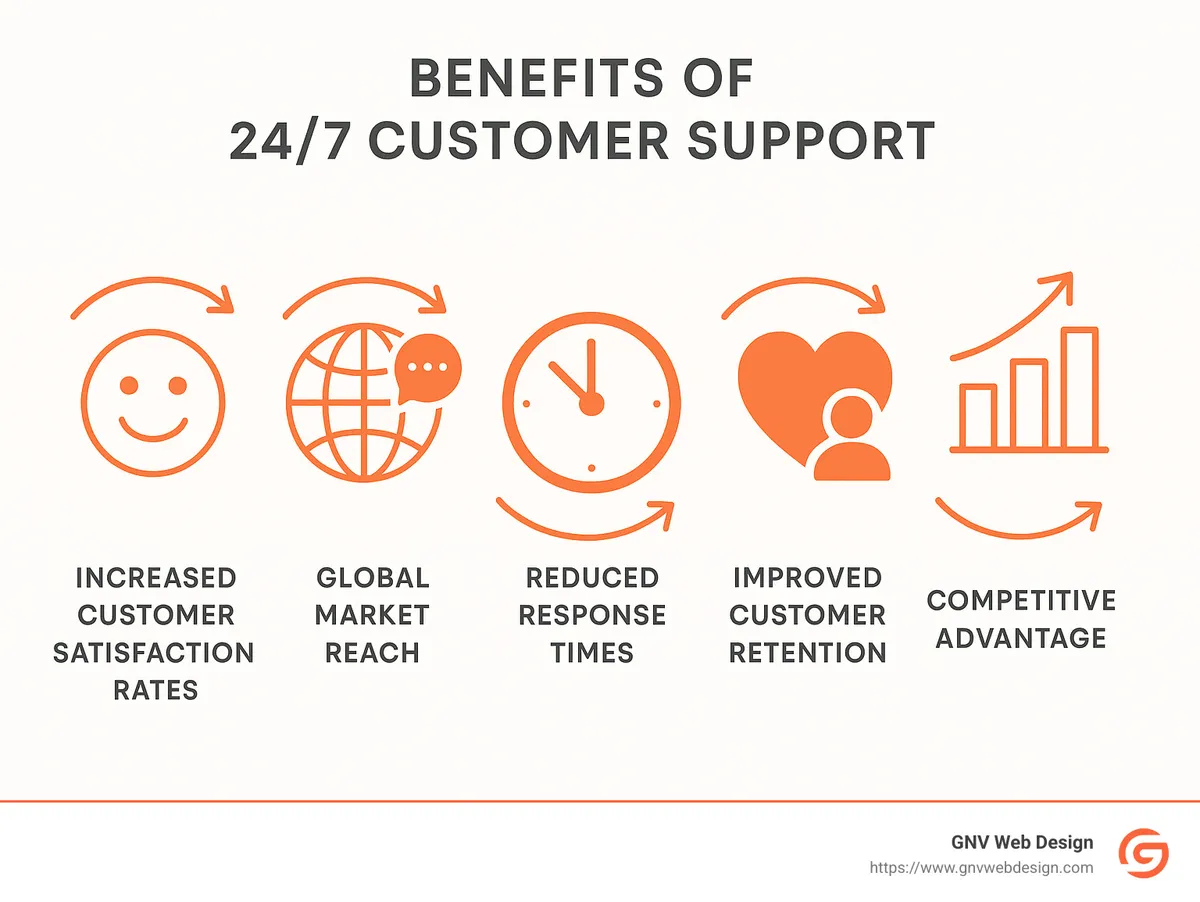
When your customers know they can get immediate help anytime they need it, they're happier—and happier customers stay loyal. Research shows that 75% of customers consider fast response times critical to a great experience. By providing immediate support, you’re showing customers they matter to you (because they do!).
This dedication to customer care translates directly into repeat business. In fact, 93% of customers are more likely to buy again when they've experienced exceptional customer service. Considering that keeping an existing customer costs far less than acquiring a new one, investing in great support just makes financial sense.
Global Market Reach
Got customers overseas or across multiple time zones? Offering 24/7 customer support isn't just helpful—it's essential. By ensuring your service never sleeps, you eliminate the barriers that limit your global expansion. Customers from Europe, Asia, Australia, and the Americas get the same high-quality support, whenever they reach out.
This type of consistent, reliable support shows your customers around the globe that you're committed to meeting their needs. It helps your brand become known for being reliable, accessible, and customer-friendly, no matter where people are located.
Proactive Problem Resolution
Ever heard the saying, "A stitch in time saves nine?" Well, that's precisely how proactive problem-solving works with 24/7 support. Imagine a customer notices a bug or issue on your website late at night. With always-on support, they can quickly alert your team. This helps you fix the small problem before it becomes a major headache affecting more customers (and your reputation).
Not only does this proactive approach keep customers happy, but it also saves your team valuable time and resources that might otherwise have gone into cleaning up a much bigger mess.

Competitive Advantage
Let's be honest—many businesses still don’t offer true round-the-clock support. Simply by providing 24/7 customer support, you're already setting your business apart from competitors. In industries where immediate help isn't yet standard, this can give your business a premium edge.
As Monica Perez, Head of Customer Success at a leading software company, shares: "We have drastically improved all of our KPIs... customer satisfaction is higher than ever!" This improvement boosts customer loyalty, positive online reviews, and valuable word-of-mouth referrals—fueling your continued growth.
Reduced Workload During Business Hours
Here's something you might not expect: offering 24/7 support can actually make your support team's lives easier. How? By spreading out customer inquiries throughout the day and night, you avoid that dreaded morning backlog of tickets. Your team starts each day fresh, without having to catch up on overnight emails and requests.
This balanced approach results in shorter queues, calmer support agents, and overall better-quality service. It shifts your team from playing catch-up to proactively helping customers, making everyone happier in the process.
Overcoming Challenges and Implementing 24/7 Customer Support
Offering 24/7 customer support clearly has many advantages. But let's be real—implementing around-the-clock service isn't always easy. Businesses often face genuine challenges like budget constraints, staffing complexities, and ensuring consistent quality. The good news? With some smart strategies and clever use of technology, you can overcome these problems and deliver outstanding support day or night.
Let's take a closer look at some of these challenges and explore practical ways to overcome them.
Common Challenges
One of the biggest problems businesses face when considering 24/7 support is cost. Providing continuous service means investing in infrastructure, software, staffing, and training. Typically, businesses might pay between $30–$60 per user monthly for support software and tools. Hiring support agents can add another $15–$25 per hour, and specialized support can cost even more. Beyond direct costs, you also need to consider the overhead of managing extended hours and training new staff.
Another significant challenge is staffing and scheduling. Finding qualified and enthusiastic staff ready to work non-traditional hours (think nights and weekends!) isn't always easy. Night shifts often have higher turnover rates, leading to inconsistent service quality. Plus, working unusual hours can impact employee well-being, making it challenging to maintain a happy, motivated team.
Finally, quality control can become a real issue when running support round-the-clock. It’s easy for service quality to slip during quieter, off-peak hours when supervision may be limited. Without careful monitoring, you risk disappointing customers who reach out when your primary team isn’t on duty.
Implementation Strategies
Fortunately, smart planning can help you overcome these challenges, ensuring your business provides excellent 24/7 customer support without breaking the bank or burning out your staff.
One of the most effective ways to address costs and staffing challenges is by leveraging technology. For example, AI-powered chatbots can handle many routine customer inquiries at all hours, freeing up human agents for more complex issues. Self-service knowledge bases let customers quickly find answers themselves—saving them (and you!) valuable time. Automated ticketing systems ensure no customer request slips through the cracks, even during busy shift changes.
At GNV Web Design, we specialize in helping businesses implement these technologies seamlessly. We can ensure your new systems integrate smoothly with your existing processes, keeping costs manageable and efficiency high.
Another smart tactic is adopting flexible staffing models custom to your business needs. One popular approach is the "follow-the-sun" model, which strategically places support teams across different time zones. This way, each team works during their local daytime hours—no midnight shifts required! Alternatively, you can try a hybrid staffing approach that combines your in-house team (working standard hours) with outsourced support providers who handle off-hours coverage.
Speaking of outsourcing—it's another valuable tool for extending your support hours affordably. Partnering with experienced support providers can save time and money compared to building an in-house overnight team. Outsourced providers typically have trained personnel ready to jump right in. Plus, they're designed to scale quickly, making them a great option if your business experiences fluctuating support volumes.
Let's quickly compare the pros and cons of in-house versus outsourced support:
| Aspect | In-House Support | Outsourced Support |
|---|---|---|
| Quality Control | Direct oversight | Limited oversight |
| Brand Knowledge | Deep understanding | Requires additional training |
| Cost Structure | Higher fixed costs | Lower fixed costs, variable pricing |
| Scalability | Limited by hiring capacity | Highly scalable |
| Technical Expertise | Can be developed over time | May initially be limited for specialized products |
| Implementation Time | Longer setup period | Faster implementation |
To learn more about effectively managing your business operations, check out our Guide to Business Website Management.
Technologies and Tools for Effective 24/7 Customer Support
To deliver stellar support without overstretching your team, you need the right tools in your toolkit. Let's briefly highlight the must-have technologies:
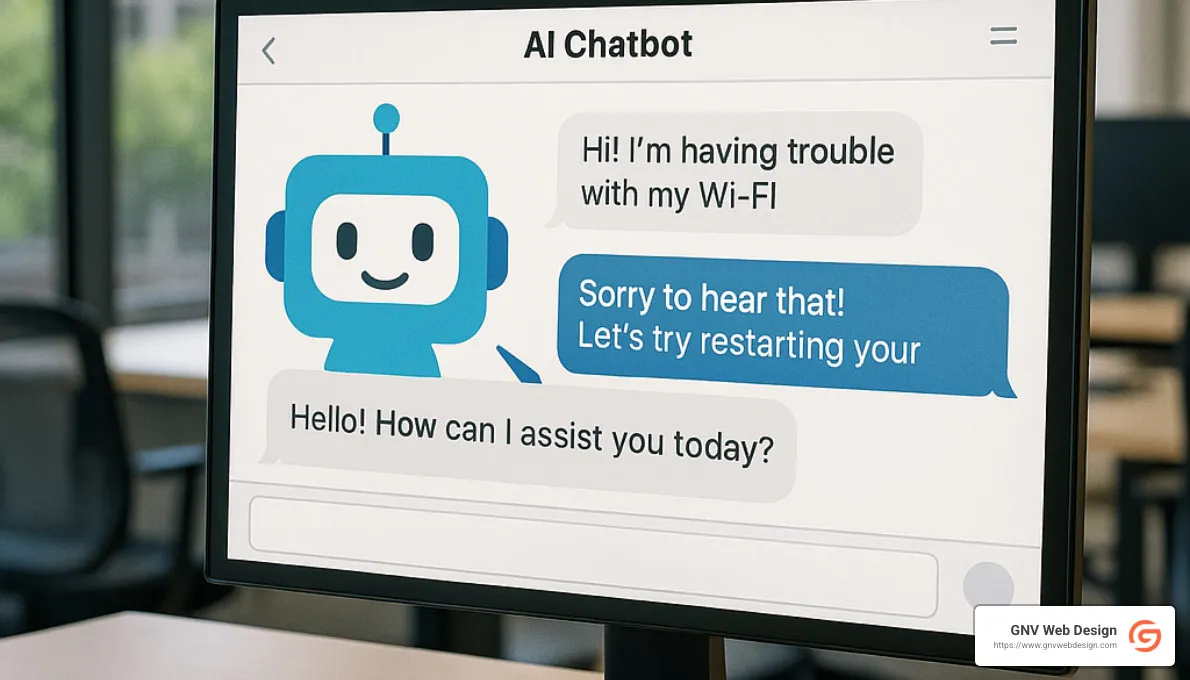
AI-Powered Chatbots are superstar helpers that handle common queries around the clock. In fact, 65% of customer service leaders plan to invest in chatbots for increased efficiency. These digital assistants can tackle frequently asked questions, guide customers through basic troubleshooting, and quickly escalate complex issues to human agents when needed.
A Comprehensive Ticketing System ensures nothing falls through the cracks. Tickets are automatically routed, prioritized, and tracked—making sure each customer gets a timely solution, no matter when they contact you.
Integrating your support channels with a Customer Relationship Management (CRM) system helps agents personalize every interaction. Staff can quickly access customer history, previous interactions, and business insights, making every interaction more meaningful.
Finally, a robust Knowledge Management System provides customers and agents with a comprehensive resource for troubleshooting, FAQs, video tutorials, and more. It's the self-serve backbone of your support strategy, empowering customers to find quick answers independently. At GNV Web Design, we recognize how important responsive systems are—learn more about our expertise by checking out Exploring Responsive Website Design Services: A List of Leaders.
Balancing Self-Service and Real-Time Support
A crucial part of successful 24/7 customer support is striking the right balance between empowering customers with self-service tools and providing immediate access to human support when needed.
More than 60% of consumers prefer self-service for simple tasks—no surprise there! But, they also want fast access to real human assistance for more complicated issues.
This means creating user-friendly, regularly updated self-service resources. These include an easy-to-steer knowledge base, interactive troubleshooting guides, engaging video tutorials, and even community forums where customers can help each other out.
However, it's equally important to have clear escalation paths to human support. If customers get stuck, make sure it's simple for them to reach a live agent. Preserve context so customers don't have to repeat themselves, use intelligent routing for faster solutions, and offer callback options when agents are busy.
This balanced approach lets your customers resolve smaller issues independently, freeing your team to tackle bigger, trickier problems. Everyone wins!
By thoughtfully addressing these challenges and adopting smart strategies, your business can successfully implement 24/7 customer support. You'll not only meet the modern customer's expectations—you'll also position yourself as a reliable, customer-centric brand that genuinely cares.
Effective Channels and Best Practices for 24/7 Customer Support
Providing excellent 24/7 customer support isn't just about being constantly available—it's about being there in the ways that customers prefer most. Today's consumers expect convenience, speed, and choice. To deliver on those expectations, your business needs an effective multi-channel strategy combined with proven best practices. Let's explore how you can make this happen!
Multi-Channel Support Strategy
To truly meet customer demands anytime, anywhere, your support must span multiple communication channels. But don't worry—you don't have to be everywhere at once! Let's look at the most effective channels to include in your 24/7 customer support strategy.
Live Chat has quickly become a customer favorite, offering instant communication without the hassle of phone calls. Your team can handle multiple conversations simultaneously through chat, making it highly efficient and responsive. Plus, customers love that they can easily share images, screenshots, or links to clarify their issues. Even better, chat transcripts offer customers (and your team!) a helpful reference for future interactions. By integrating live chat with chatbots, you can achieve seamless after-hours coverage without compromising quality.
Speaking of chatbots, AI-powered assistants have become invaluable for efficient, scalable support. These helpful virtual team members are perfect for answering frequently asked questions, walking customers through simple troubleshooting steps, and collecting important details before handing more complex inquiries to human agents. In fact, according to Forbes research, chatbots can boost your sales by up to 67%, all while reducing support costs. That's what we call a win-win!
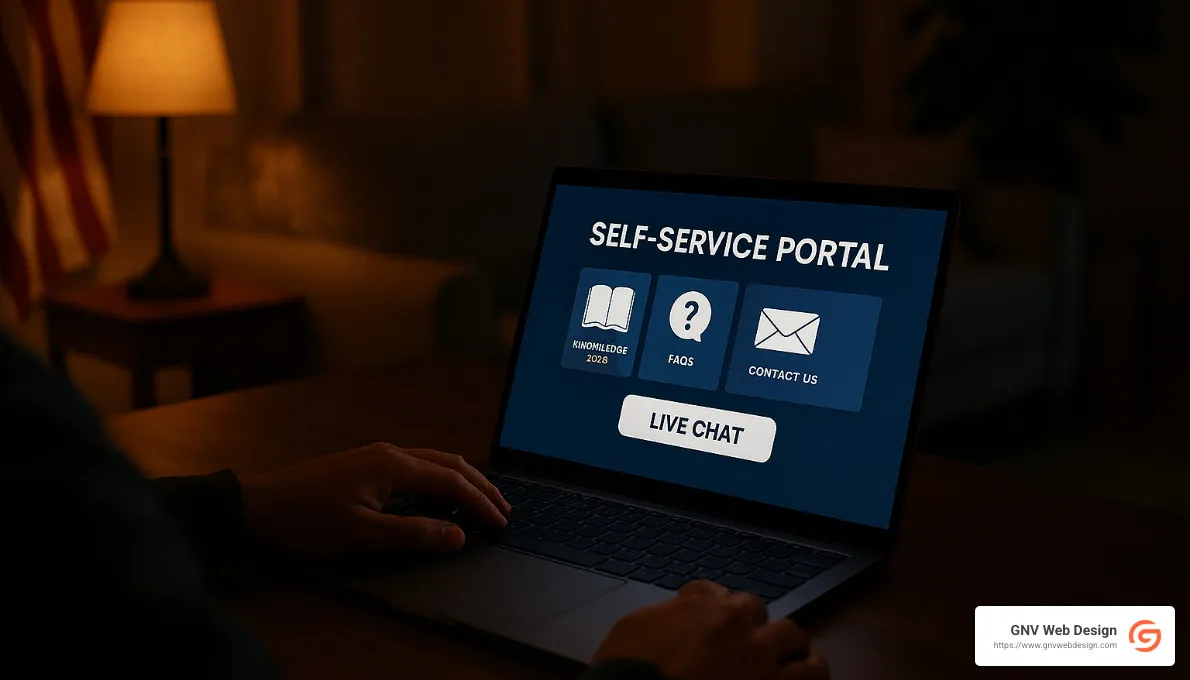
Of course, empowering your customers to help themselves can significantly improve their experience. That's where self-service portals shine. Providing a comprehensive knowledge base complete with searchable documentation, easy-to-follow video tutorials, interactive troubleshooting guides, and supportive community forums lets customers find solutions quickly and independently. Believe it or not, nearly 90% of customers expect businesses nowadays to offer self-service options. So, it's definitely worth the investment!
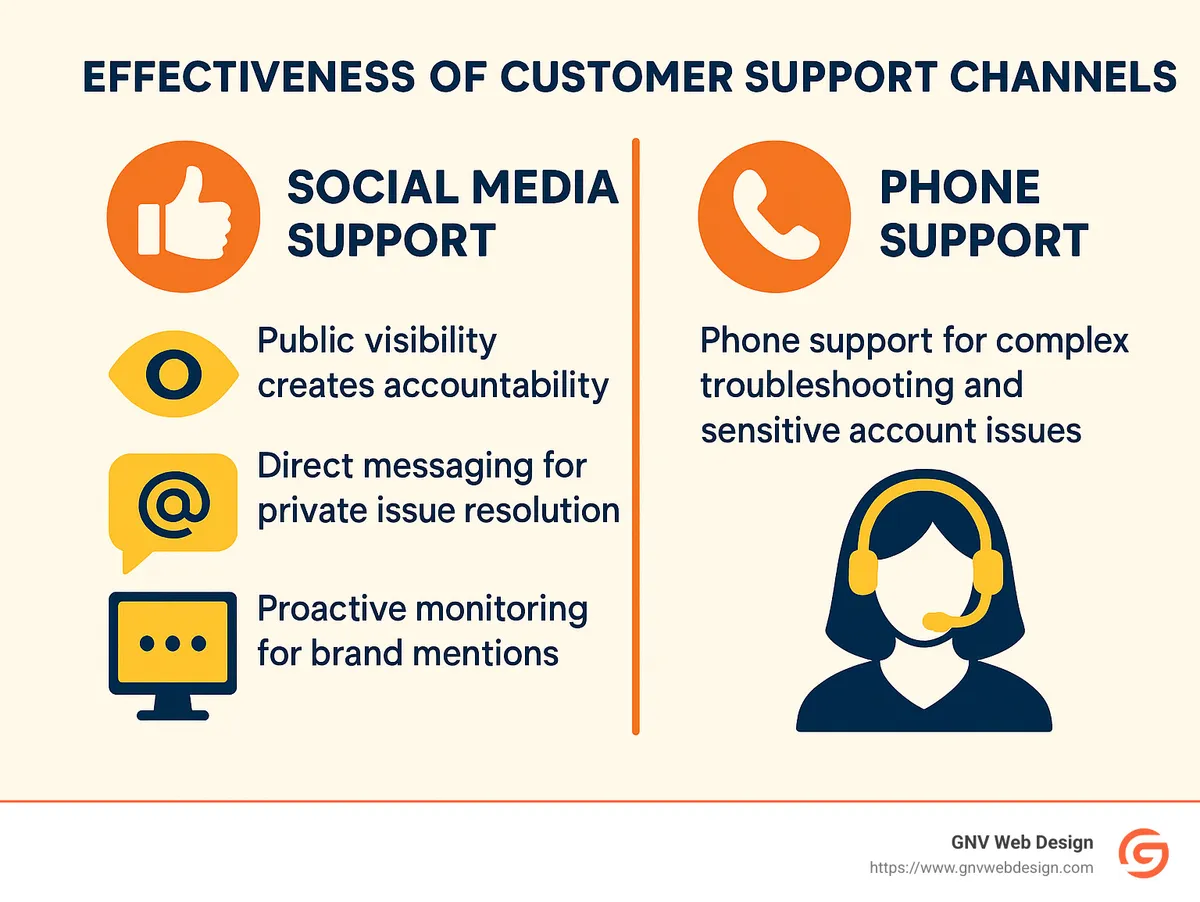
Don't forget social media support, which has grown rapidly over recent years. Customers increasingly turn to platforms like Facebook and Twitter to get quick answers. Social media offers a unique combination of public accountability and private messaging for sensitive concerns. However, be prepared: customers expect faster responses here—typically within 15 minutes on Twitter and 60 minutes on Facebook. Stay responsive, and you'll not only resolve issues effectively but also publicly demonstrate your commitment to customer satisfaction.
While digital channels are growing in popularity, phone support still holds a special place in customer service. Complex troubleshooting, sensitive account issues, and emergency situations often require the human touch that voice communication provides. With a customer satisfaction rating of 91%, phone support remains essential to a comprehensive 24/7 support approach.
Best Practices for 24/7 Support Excellence
Now, having multiple channels is just the start. How you manage and deliver support across those channels is equally important. Here are some proven best practices to ensure your 24/7 customer support consistently delivers exceptional experiences:
First, create comprehensive support playbooks to standardize procedures, troubleshooting steps, and escalation paths. Playbooks help your agents deliver consistent quality regardless of the shift, and they dramatically shorten the training time needed for new hires. As one industry expert humorously puts it, "A good support playbook is like grandma's famous pasta sauce recipe—perfected once, enjoyed forever!"
Speaking of training, invest proactively in thorough programs covering product knowledge, communication skills, empathy, troubleshooting, and even cultural sensitivity for global audiences. Don't forget regular refresher training sessions to keep your entire team sharp and up-to-date.
Quality assurance isn't just for manufacturing plants—it's crucial for support teams too! Implement regular reviews of support interactions, use customer satisfaction surveys, and track performance metrics closely. Combine peer reviews with continuous coaching and recognize extraordinary service to keep morale high and service exceptional.
Smooth handoffs between shifts can make or break your 24/7 operation. To ensure seamless transitions, encourage clear documentation of ongoing issues, establish strong communication protocols, and schedule overlap periods between teams. Regular meetings and a unified customer history view help your support agents stay aligned and well-informed across all shifts.
Finally—and perhaps most importantly—actively listen to and learn from customer feedback. Use post-interaction surveys, social media monitoring, and regular analysis of common issues to identify areas for improvement. Consider forming customer advisory panels or focus groups to gain deeper insights. By continuously acting on this valuable input, you'll consistently evolve and improve your support quality.
For more helpful tips on crafting customer-focused experiences, explore our guide: The Customer is Always Right: How to Design User-Centric Websites.
Leveraging Chatbots and AI in 24/7 Customer Support
AI might sound futuristic, but it's already here—changing customer support into something scalable, affordable, and effective for businesses of all sizes. Let's explore how modern AI can take your 24/7 customer support to new heights.
Today's chatbots aren't the stiff, frustrating robots of the past. They're equipped with advanced natural language processing, allowing them to understand conversational queries and respond naturally. Machine learning helps these chatbots get better over time, and sentiment analysis even allows them to recognize when a customer might be getting frustrated, alerting a human agent to step in.
When implementing AI tools, it's best to start small, tackling specific, common customer concerns before gradually expanding capabilities. Always provide clear escalation paths to human assistance—customers appreciate knowing they're not stuck talking to a bot forever! Don't forget to transparently inform users they're interacting with an automated system, making expectations clear from the start.
Regularly train your AI by analyzing interactions to identify improvements. By combining automation for simpler tasks with human agents for complex issues, you create an effective, balanced solution that customers truly appreciate.
When measuring AI effectiveness, track metrics like containment rate (the percentage of queries resolved completely by AI), customer satisfaction scores, average handle times, reduced ticket volumes, and overall cost savings. With careful implementation, you can significantly reduce support costs while maintaining high satisfaction rates. It's no wonder 65% of customer service leaders want to invest more in chatbots!
Done right, AI-powered support helps your business scale smoothly, freeing your human agents to focus on the complex issues that truly require their empathy and expertise. It's technology with a human heart—and your customers will love you for it.
Is 24/7 Customer Support Right for Your Business?
Deciding whether or not to offer 24/7 customer support isn't always straightforward. Although continuous support brings undeniable advantages, it may not be the right choice for every business. To make the best decision for your company, it's important to take a close look at several crucial factors.
Assessing Your Business Needs
The first step in determining if 24/7 customer support is right for you is understanding your customers' habits and expectations. Ask yourself about your customer base: Are they spread across multiple time zones? Do they often need assistance outside typical business hours? For businesses primarily serving local customers who rarely require overnight assistance, round-the-clock support might not be necessary.
However, if your company has customers around the globe—especially in regions significantly outside your own time zone—then providing uninterrupted support becomes essential for customer satisfaction and loyalty. Global customers expect immediate help just as much as your local clientele do.
Next, think about your industry and competitors. Some industries practically demand 24/7 customer support as the norm. If you're in e-commerce, technology and SaaS, finance, healthcare, travel, telecommunications, utilities, or emergency services, continuous customer support isn't just beneficial—it's often expected. Take a look at your competition: do your closest competitors offer round-the-clock service? If they do, adding this feature yourself could help level the playing field. If they don't, it might be your chance to stand out and attract more customers.

You should also consider how critical your products or services are to your customers. Is your offering something they use in time-sensitive situations, or something they depend on for ongoing business operations? Consider a web hosting provider: their customers expect immediate help during outages, making 24/7 customer support practically mandatory. Likewise, companies providing essential healthcare services or financial management tools often need continuous support to maintain customer trust.
Finally, weigh your financial considerations. Think about the average lifetime value of your customers. Would losing even one due to unavailable support significantly impact your revenue? Could offering 24/7 customer support justify premium pricing or help attract higher-value customers? For subscription-based businesses or those with long-term customer relationships, investing in continuous support often pays for itself in higher retention rates and customer satisfaction.
Making the Decision about 24/7 Customer Support
Once you've carefully assessed these factors, it's time to consider how you'll implement your support strategy. Thankfully, going 24/7 doesn't have to mean diving straight into the deep end. You can start gradually, which helps keep costs manageable while still meeting customer expectations.
Consider a phased implementation approach. Try first extending your support hours into the evenings and weekends, then gather data to determine if customers are utilizing these extra hours. You might start with chatbots or knowledge bases for overnight support at first, and gradually add live agents during peak off-hours as growth justifies the additional investment.
Another way to ease into continuous support is through hybrid models. Combining live agents during busy daytime hours with automated tools, like AI chatbots and self-service portals overnight, can be highly effective. An on-call team or escalation service for urgent matters also ensures customers get immediate help for critical problems—even when live agents aren't staffing every shift. At GNV Web Design, we've helped many clients successfully implement these hybrid approaches, carefully balancing resources with customer expectations.
Strategic outsourcing can also be a game-changer. Partnering with specialized customer support providers allows you to quickly scale your service without the costs of hiring and training a fully in-house overnight team. You can outsource specific shifts or even leverage teams across different global regions to provide seamless support. While outsourcing does require diligent training and quality oversight, it can deliver dramatic results at lower cost than building in-house operations from scratch.
No matter which path you choose, don't just set it and forget it. Continuously evaluate and adjust your support strategy based on real-time data. Monitor customer requests by time and channel, track customer satisfaction, and analyze how support availability impacts revenue and retention. After all, customer needs constantly evolve, and your business should evolve right alongside them.
Deciding whether to offer 24/7 customer support isn't always easy, but taking the time to carefully examine your company's specific circumstances can help you make the right choice. At GNV Web Design, we're here to support you in building a customer service experience that delights your customers—anytime they need you.
Frequently Asked Questions about 24/7 Customer Support
Is 24/7 customer support necessary for every business?
Not every business needs 24/7 customer support, but it can be incredibly valuable under certain circumstances. Determining if it's right for you depends on several factors.
For instance, businesses with customers spread across multiple time zones often find round-the-clock support essential. Industries like healthcare, finance, technology, and e-commerce commonly have customers who expect immediate assistance at any hour. Additionally, if your product or service is mission-critical—meaning downtime or delays could have serious consequences—then continuous support becomes vital.
On the other hand, if your customer base is primarily local and concentrated within a single time zone, standard business-hour support may be sufficient. Even then, offering basic after-hours assistance through automated solutions or self-service options can significantly boost customer satisfaction without overwhelming your resources.
How can small businesses afford to provide 24/7 support?
Providing 24/7 customer support can feel overwhelming for small businesses working with tighter budgets—but with the right approach, it's completely achievable.
First, consider leveraging technology to handle common customer questions and simple tasks. AI-powered chatbots and self-service knowledge bases can address many routine inquiries without needing a live agent. You could also start by offering limited after-hours support through channels like email or chat, expanding to phone support only as your business grows.
Outsourcing your after-hours support to specialized providers can also be a cost-effective strategy. These providers share their resources across multiple clients, making the service more affordable. Additionally, offering tiered support levels is another great way to control costs—basic assistance could be available 24/7, with premium support options available at an extra charge for customers who need it.
At GNV Web Design, we've seen small businesses in Gainesville, Tampa, Jacksonville, and throughout Florida successfully adopt these strategies. You can certainly create a cost-effective, scalable support plan custom to your budget—without sacrificing quality!
What are the key technologies for managing 24/7 support?
Effectively delivering 24/7 customer support relies heavily on having the right technologies in place. Some of the most impactful tools include AI-powered chatbots, which handle common, repetitive inquiries and provide immediate responses, no matter the time of day.
Comprehensive CRM (Customer Relationship Management) systems are another must-have—they maintain detailed customer interaction histories and provide valuable context to support agents. Knowledge management platforms, or self-service portals, enable both customers and staff to easily find answers to common questions and troubleshoot simple issues independently.
Additionally, multichannel support platforms unify your communication channels (chat, email, phone, social media) into one easy-to-manage system, ensuring seamless customer interactions at every touchpoint. Automated ticketing systems ensure that customer concerns never slip through the cracks—especially critical during shift changes.
Finally, analytics and reporting tools track your support team's performance, identify areas for improvement, and help maintain consistently high service quality. Cloud-based infrastructure is also vital, enabling remote agents to provide continuous support from different locations.
The key here is to select and integrate these tools carefully, ensuring smooth communication and an exceptional customer experience.
How do you measure the success of 24/7 customer support?
Measuring the success of your 24/7 customer support involves tracking both operational performance and customer satisfaction. Operational metrics like first response time, ticket resolution speed, average handle time, cost per interaction, agent productivity, and workload distribution give you a clear picture of your team's efficiency.
On the customer experience side, metrics such as Customer Satisfaction Scores (CSAT), Net Promoter Score (NPS), Customer Effort Score (CES), customer retention rates, and repeat purchase behaviors help you understand how effectively your support meets customer needs and influences their loyalty.
Regularly reviewing these metrics across different time periods, shifts, and support channels helps you pinpoint areas doing well and those needing improvement. By continually adjusting your strategies based on hard data, you can steadily improve the quality and effectiveness of your support.
How do you maintain consistent quality across different support shifts?
Ensuring consistent service quality around-the-clock is critical, and it starts with thorough, standardized training. Every support team member—whether working day or night—should receive equal onboarding and ongoing education. Detailed support playbooks documenting common scenarios, troubleshooting steps, and escalation processes further ensure consistent customer experiences.
Regular team communication is equally vital. Scheduling overlap periods between shifts and using digital collaboration tools (like Slack or internal messaging systems) keep everyone on the same page. Quality monitoring should also remain consistent across shifts, with regular review of interactions and systematic feedback for improvement.
Centralized knowledge resources, available to all agents, eliminate confusion and ensure everyone has current information at their fingertips. Setting clear performance expectations, such as consistent Service Level Agreements (SLAs), ensures every shift is held to the same high standards.
Finally, periodic cross-training or rotating agents between shifts helps teams understand each other's challenges and maintains consistency in customer interactions. With careful planning and ongoing management, your customers will experience high-quality support regardless of when they reach out for help.
Conclusion
In today's digital-first world, providing 24/7 customer support has evolved from a luxury to a competitive necessity for many businesses. The expectations of modern customers have fundamentally shifted – people no longer accept being told to "call back during business hours" when they encounter a problem at 11 PM.
As we've explored throughout this guide, round-the-clock support delivers remarkable benefits that directly impact your bottom line. When customers know they can reach you anytime, their trust in your brand deepens significantly. This translates into improved customer satisfaction and loyalty – the foundation of sustainable business growth.
The global nature of today's marketplace means your customers might be browsing your website from Tokyo while you're fast asleep in Florida. By offering continuous support, you effectively remove time zone barriers, enabling expanded global market reach without the limitations of traditional business hours.
One of the most valuable aspects of always-on support is the ability to address small issues before they balloon into major problems. This proactive problem resolution approach not only improves customer experience but often saves significant resources that would otherwise be spent fixing larger issues that developed due to delayed responses.
"We implemented 24/7 chat support last year, and our customer satisfaction scores jumped by 22%," shared one of our clients, a Tampa-based e-commerce business. "The competitive advantage has been enormous – customers specifically mention our availability in reviews."
While implementing continuous support does come with challenges related to cost, staffing, and quality control, we've seen how these problems can be overcome. Strategic use of technology, thoughtful staffing models, and phased implementation approaches make round-the-clock support accessible even for smaller businesses.
The secret sauce? Finding the right balance between automated self-service options and human-assisted support. By leveraging AI-powered chatbots for routine inquiries while ensuring smooth escalation to human agents for complex issues, you can create an support ecosystem that's both efficient and empathetic.
At GNV Web Design, we understand that your website often serves as the first point of contact for customers seeking support. We specialize in creating user-friendly websites with integrated support features that help you deliver exceptional customer experiences around the clock. Our team works with businesses across Gainesville, Tampa, Jacksonville, Tallahassee, and Ocala to implement comprehensive digital solutions that include custom web development with integrated support channels, self-service knowledge bases, chatbot implementation, and mobile-responsive designs.
24/7 customer support doesn't necessarily mean staffing a full call center around the clock. With the right strategy and tools, even small businesses can provide responsive assistance at any hour, meeting customer expectations and building lasting relationships. Something as simple as an after-hours chatbot that collects information and sets expectations for a response the next morning can dramatically improve customer perception.
For more information on maintaining an effective online presence, check out our guide on Website Maintenance, SEO, and User Experience.
The businesses that thrive in tomorrow's marketplace will be those that recognize the importance of being there for their customers whenever they're needed – not just during conventional business hours. By implementing effective 24/7 customer support, you demonstrate your commitment to customer success and position your business for sustainable growth in an increasingly competitive landscape.
After all, in a world that never sleeps, the businesses that remain available to help are the ones that win hearts, minds, and loyal customers for years to come.

